
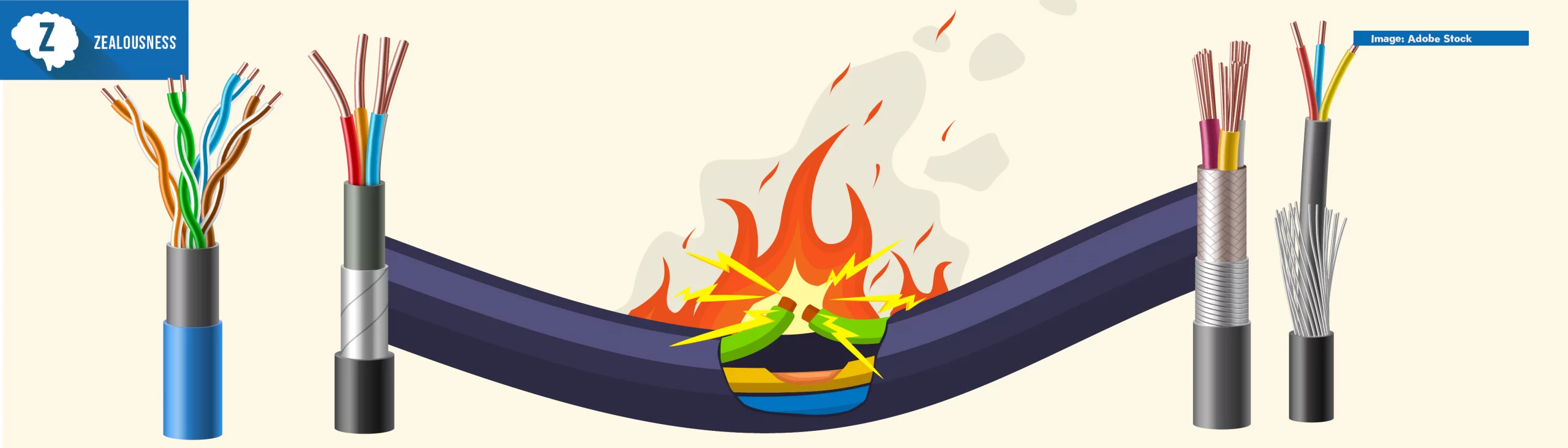
Data centers are the backbone of the internet. Every streaming service, cloud application, banking transaction, and online classroom depends on them running without interruption. And at the heart of all that infrastructure — powering racks of servers, cooling systems, and backup generators — are the cables that carry the load.
Power cabling might not be the most glamorous part of data center design, but it’s one of the most consequential. Here’s why it deserves far more attention than it usually gets.
1. Downtime Is Extraordinarily Expensive
A data center outage doesn’t just cause inconvenience; it can have significant operational and financial consequences. Industry reports show that many organizations experience outage costs exceeding $100,000, while the most severe incidents can result in losses reaching into the millions.
Power-related issues are among the factors that can contribute to downtime. Cable faults, overloaded circuits, and connections that deteriorate under sustained demand can affect system reliability if left unaddressed. Maintaining dependable electrical infrastructure, including high-quality power cables, plays an important role in supporting uptime and reducing the risk of unexpected disruptions.
2. Heat Buildup Starts at the Cable Level
Cables that aren’t rated for the loads they carry generate excess heat. In a sealed server room already managing significant thermal output from hundreds of processors, that extra heat matters. It stresses adjacent equipment, shortens component lifespans, and in worst cases, creates fire risk.
High-quality, properly rated cables are engineered to handle sustained current without excessive resistance — which means less heat, better efficiency, and a safer operating environment overall.
3. Cable Quality Affects Energy Efficiency
Every bit of resistance in a power cable translates into energy lost as heat rather than delivered to the load. At the scale of a modern data center — with thousands of servers running 24 hours a day — that inefficiency adds up to significant cost over time.
Low-resistance, high-conductivity cabling helps improve Power Usage Effectiveness (PUE), which is the standard metric data center operators use to measure efficiency. Even marginal improvements in PUE at scale represent meaningful reductions in both energy spend and carbon footprint.
4. Scalability Demands Future-Proof Cabling
Data centers don’t stay the same size. Capacity grows, hardware evolves, and power densities increase as newer server generations demand more watts per rack than their predecessors. Cabling installed today needs to support not just current loads, but anticipated future ones.
This is why selecting properly rated, flexible cabling infrastructure from the start matters so much. Retrofitting an active data center to replace under-spec cabling is expensive, disruptive, and sometimes operationally impossible without downtime.
5. Compliance and Safety Standards Are Non-Negotiable
Data centers operate under strict electrical codes — NEC, IEC, and various regional standards govern how power is distributed, how cables are rated, and how installations must be documented. Using non-compliant or substandard cabling doesn’t just create risk — it creates liability.
Facility managers who work with established, specification-grade power cables designed for demanding industrial and data center environments can meet compliance requirements with confidence and reduce audit risk significantly. Duraline manufactures cables built to rigorous specifications, making them a trusted choice for facilities where reliability isn’t optional.
6. Reliability Underpins Every Other System
Redundancy is a core principle of data center design. Backup generators, UPS systems, dual power feeds, and failover networking all exist to keep operations running when something goes wrong. But according to the Uptime Institute, power failures account for 36% of the biggest global public service outages — making it the single most common cause of serious data center incidents. Every one of those redundant systems depends on reliable cabling to function.
7. It Supports the People Who Depend on It
It’s worth stepping back and thinking about what data centers actually enable. Hospitals rely on cloud-hosted patient records. Schools deliver online education to students who can’t attend in person. Businesses process payroll, communicate with customers, and manage operations through systems that run on data center infrastructure.
When any part of that chain fails, real people are affected. The cable running power to a server rack is far removed from the student watching a lecture or the nurse pulling up a patient’s file — but the connection is real. Reliability at the infrastructure level is what makes everything above it possible.
Final Thoughts
Power cabling is rarely the first thing data center operators think about when planning a build or an upgrade. But it sits at the foundation of everything. Get it right, and every system above it benefits. Get it wrong, and the consequences ripple upward in ways that are expensive, disruptive, and sometimes dangerous.
The best data centers treat their cabling infrastructure with the same seriousness as their servers and cooling systems. That mindset is what separates facilities that consistently meet their uptime targets from the ones that don’t.











Comments are closed.