
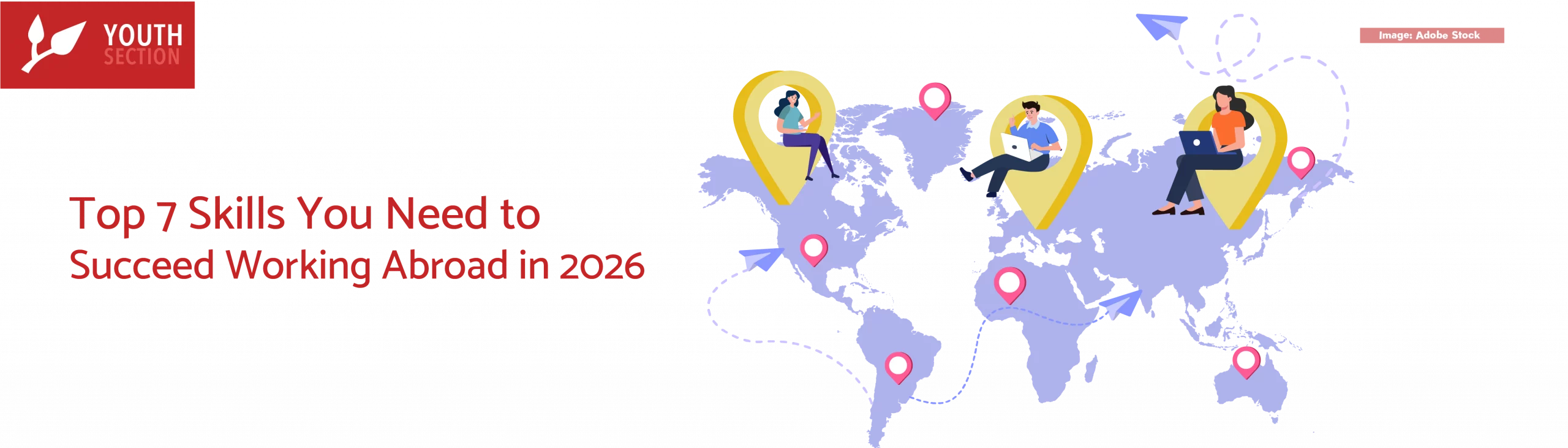
Working abroad sounds romantic until you actually land somewhere new and realise you can’t read half the signs. That’s the moment when the Instagram fantasy crashes into reality. You quickly learn that your degree, your polished CV, and your global mindset don’t carry you very far on their own. The people who actually do well overseas tend to share a few practical skills. Here are seven skills that matter the most in 2026.
Cultural Pattern Recognition
Memorising etiquette lists can be fun, but more likely than not, nobody has time for that. What actually helps is learning to spot patterns in how people behave. Watch how colleagues interrupt each other. Notice who speaks first in meetings. Pay attention to how directly people say “no”. You’re basically doing low-level anthropology, whether you realise it or not.
In some places, people argue openly and loudly. In others, disagreement happens quietly after the meeting. If you just go about your day without noticing what’s happening around you, you’re missing out. Life abroad becomes easier when you’re in the loop. You stop reacting emotionally to every weird moment. Instead, you think: okay, that’s just how this place works.

Tactical Curiosity
Curiosity sounds soft, but it’s actually a survival tool. You’re going to run into things that make zero sense. Processes that look inefficient. Social habits that seem pointless. Food combinations that raise serious questions. Your first instinct might be to judge. Don’t.
Instead, ask questions in a low-key way. You don’t want to sound like an entitled tourist, but like someone who’s trying to understand the logic of the system. Why do meetings start late here? Why does everyone copy five managers on emails? Why does nobody say no directly? Sometimes there’s a solid reason. Sometimes there isn’t. But asking gets you information, and information keeps you from accidentally looking like a fool.
Opportunity Spotting
Living abroad exposes you to paths that wouldn’t exist back home. The problem is that most people are too busy trying to recreate their old life to notice them. Opportunity spotting means paying attention to the strange doors that open.
Maybe you meet someone who runs a small startup, or a colleague introduces you to community work. You could even stumble across something unexpected, like volunteer work opportunities in Sri Lanka while researching regional projects and suddenly realize international NGOs operate in ways you never considered. Those random moments can reshape your career.
Working abroad isn’t just about the job you arrived for. It’s about the network, the side experiences, and the strange directions your life can take when you’re outside your usual environment.
Administrative Endurance
Nobody talks about this part of working abroad because it’s boring, but it will test your patience more than your actual job.
Visas, residency permits, tax forms, health insurance documents, and random government websites that crash every second click can be a nightmare. Welcome to the real adventure. You can’t escape it. Even good systems are unfamiliar systems, and that alone is exhausting.
You need a weird kind of stamina for bureaucracy. The people who fail abroad often aren’t defeated by work itself. They’re defeated by paperwork. Which is tragic but very real.
Social Risk Taking
You cannot build a life abroad if you only hang out with other foreigners. It feels safe and familiar. Instead of making you grow, it traps you in a bubble. Soon you’re living in Berlin, or Tokyo, or Melbourne, yet your entire social circle consists of people from the same three countries complaining about local supermarkets. That’s not living abroad. That’s relocating your comfort zone.
You can easily overcome that by deciding to take small social risks. Small social risks are something like going to a bar and talking to others or joining a local yoga class and chatting about your day with other attendants. Go to a place where you’ll meet people with shared interests, like a sports bar or the gym. These are easy, and they’re worth it.
Context Switching
Working abroad means you’re constantly switching mental gears. At work, you might operate in English with one communication style. Once you leave the office, it can be challenging to switch and participate.
What happens here is that your brain ends up juggling contexts all day. The trick is learning to switch quickly instead of resisting it. You will learn to speak differently with your manager than with a street vendor and write emails one way and text friends another. That flexibility is adaptive, and the sooner you learn it, the better.
Strategic Humility
You’re going to be wrong a lot when you live abroad. Your ego will take a few hits, and it won’t feel nice. Strategic humility means accepting that without spiralling into embarrassment every five minutes. You admit mistakes quickly. You laugh at yourself. Then you move on.
Most locals don’t expect you to be perfect anyway. They just don’t want you acting like you already understand everything. The fastest way to annoy people in another country is acting like an expert on their culture after living there for six weeks. Don’t be that person.
Conclusion
Working abroad in 2026 feels like an ongoing experiment where you’re constantly adjusting how you think, communicate, and operate in the world. Some people treat that experiment like a burden. Others treat it like a weird privilege. If you build these skills, you will likely adapt faster and find meaning in this privilege.












Comments are closed.