
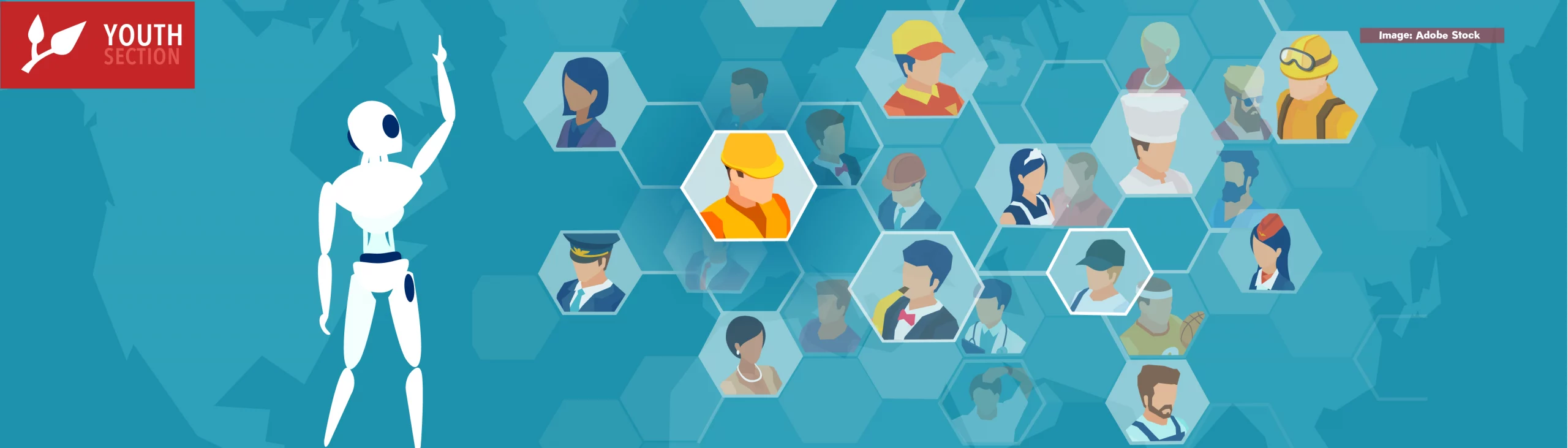
Ten years ago, there was no such job as “AI prompt engineer.” Today, it’s a six-figure career. The job market is evolving fast, and traditional career advice can’t keep up with it. Artificial intelligence, automation, and digital platforms are reshaping entire industries, not gradually, but rapidly. AI will inevitably be incorporated into nearly every industry as a tool, in most cases replacing the more mundane tasks and roles. Apart from AI, in the past 10 years, there have been other major innovations, such as smartphones and social media.
In the next five years, job growth and losses are projected to be substantial:
- 170 million jobs created
- 92 million jobs displaced
To exemplify the fact that these rapid developments are having an effect on innovation in the job market, here are 10 careers that didn’t exist 10 years ago:
- Smartphone app developer
- Social media manager
- AI prompt engineer
- Uber driver
- Driverless car engineer
- Cloud computing specialist (The rise of companies like Google, Oracle, Amazon, and Meta has created immense cloud computing technologies, such as web services.)
- Big-data analyst
- Sustainability manager
- YouTube content creators
- Drone operators
Why is traditional career advice outdated?
One profound reason why career advice needs major changing is that the linear element of career ladders is disappearing. People now pivot industries, roles, and skill sets multiple times within a decade. Consequently, degrees no longer guarantee relevance; skills age better than diplomas do. Employers care more about what you can do than what you studied. Additionally, technology is reshaping roles every few years due to its recent expeditious growth. Automation and AI are continually redefining jobs, even within the same title. In the past 10 years, the gig-and-creator economy has changed how value is produced; influence, audience, and personal brand now translate directly into income. If you can successfully leverage these tools, it will render success. Along with this shift, employers prioritize adaptability over stability. Curiosity, problem-solving, and learning speed outweigh long-term tenure.
The skills you should develop and what you should focus on before choosing your career
Employers are expecting that 39 percent of the key skills required in the job market will change by 2030. These will mostly be technological skills, such as those in big data, AI, cybersecurity, networks, and technological literacy. Other crucial skills are creative thinking and resilience, essential for roles such as app developer and AI prompt engineer. Flexibility and agility are a couple of other key traits to have, as they are of the utmost importance in a job such as Uber driver. Curiosity is the engine behind every other skill. If you are curious, you:
- Ask better questions
- Explore trends early
- Notice change before others do
- Teach yourself new things
Many emerging careers were built by curious people experimenting with something before there was a formal job description for it. Curiosity turns uncertainty into opportunity. Perhaps the most important shift is that education no longer ends at graduation. In the past, learning was front-loaded: study for 16 to 20 years, then work for 40. Now learning runs parallel to your career. Some examples of this are online certifications, skill-based workshops, and learning new software every few years.
The safest career path today lies not in choosing the “right” job but in being the kind of person who can thrive in any job. Technology will continue to create roles we haven’t yet thought of while reshaping the ones we thought were secure. The students who will succeed won’t be the ones who simply memorized their lessons—they’ll be the ones who have learned how to adapt, think creatively, stay curious, and, above all, keep learning long after graduation. The next career that changes everything likely doesn’t exist yet. The real question is whether or not you’ll be ready for it.
References
- Leopold, Till. “Future of Jobs Report 2025: The Jobs of the Future – and the Skills You Need to Get Them.” World Economic Forum, 8 Jan. 2025. www.weforum.org/stories/2025/01/future-of-jobs-report-2025-jobs-of-the-future-and-the-skills-you-need-to-get-them/
- Hutt, Rosamond, and Rachel Hallett. “10 Jobs That Didn’t Exist 10 Years Ago.” World Economic Forum, 7 June 2016. www.weforum.org/stories/2016/06/10-jobs-that-didn-t-exist-10-years-ago/












Comments are closed.