
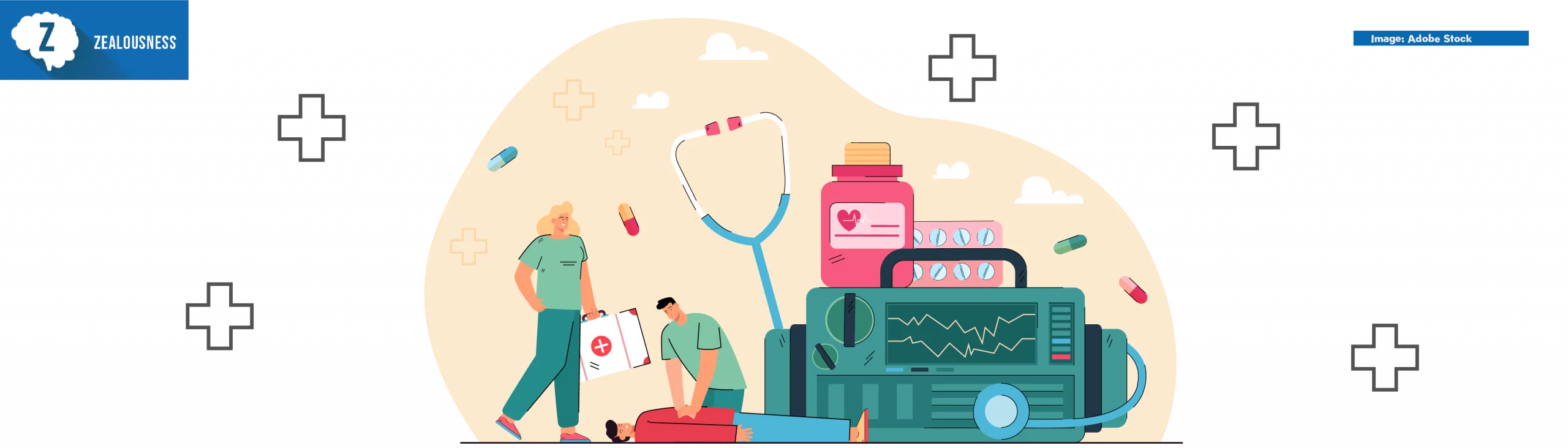
Most of us walk into work assuming the day will be ordinary. We answer emails, sit through meetings, refill the coffee, and head home. But every so often, something goes wrong fast, and a coworker collapses before anyone has time to think. In those few seconds, the most useful person in the building isn’t a manager or a paramedic. It’s whoever knows what to do.
That’s the quiet case for basic CPR. It isn’t about turning employees into medics. It’s about making sure that when a heart stops, someone nearby can act instead of freeze. Here are seven reasons it belongs on every workplace’s radar.
1. Cardiac Emergencies Happen at Work
Cardiac emergencies rarely arrive with warning, and they are not limited to a particular age group, profession, or fitness level. Since many adults spend a significant portion of their day at work, offices, warehouses, and job sites often become the places where bystanders are forced to respond before medical professionals can arrive. That reality is one reason many people choose to enroll for First Aid & CPR Training Courses before an emergency situation ever puts those skills to the test.
Training providers such as Western Canada Fire & First Aid increasingly focus on practical, scenario-based instruction designed around real workplace emergencies rather than purely textbook demonstrations. Hands-on preparation can make a meaningful difference in helping people respond more calmly and confidently during the critical first few minutes of a medical crisis.
2. The First Few Minutes Decide Everything
When the heart stops, the clock becomes brutal. Brain damage can begin within minutes, and survival odds drop sharply with every passing moment that nothing is done.
This is where a trained bystander changes the outcome. The American Heart Association notes that CPR performed immediately can double or even triple a cardiac arrest victim’s chance of survival. That’s not a small edge. It’s often the difference between someone going home and someone not.
3. Help Is Further Away Than You Think
It’s easy to assume an ambulance will arrive in moments, but response times vary a lot depending on traffic, location, and how busy the service is that day. Several minutes is common, and those minutes are exactly the ones that matter most.
CPR fills that gap. A coworker keeping blood and oxygen moving until professionals arrive is essentially buying time the patient doesn’t have on their own.
4. CPR Is Easier to Learn Than People Expect
A lot of people avoid training because they picture something complicated or intimidating. In reality, the core of hands-only CPR is straightforward enough to learn in a single afternoon.
The basics usually come down to a few simple actions:-
- Check the scene and the person for responsiveness.
- Call emergency services or send someone to do it.
- Push hard and fast in the center of the chest.
- Keep going until help or an AED arrives.
The hard part isn’t the technique. It’s having the confidence to start, and that confidence is exactly what a short course delivers.
5. Trained Staff Build a Safer Culture
When even a handful of employees know CPR, the whole workplace feels different. People move through their day knowing that if something happens, the response won’t depend on luck.
That sense of preparedness tends to spread. Teams that train together talk more openly about safety, keep first aid kits stocked, and pay attention to where the nearest defibrillator sits. Skills are the obvious benefit, but the shift in mindset is just as valuable.
6. It Supports Compliance and Peace of Mind
Many regions expect workplaces to have trained first aiders on site, and the specifics vary by industry and headcount. Meeting those requirements isn’t just box-ticking; it signals that an employer takes its people seriously.
For business owners, that protection cuts both ways. Trained staff reduces the chance of a bad situation getting worse, and they show regulators, insurers, and employees alike that safety isn’t an afterthought. For workers, knowing the company is genuinely prepared is its own kind of reassurance.
7. The Skill Follows You Home
Here’s the part that’s easy to overlook: CPR doesn’t clock out at five. Once someone learns it, they carry it everywhere to family dinners, the gym, the grocery store, the soccer field.
Many cardiac emergencies actually happen at home, often in front of loved ones. An employee who trained for the workplace may end up using that knowledge to save a parent, a partner, or a stranger on the street. Few job perks reach that far.
Final Thought
The barrier to learning CPR is genuinely small. A short course, a bit of practice on a mannequin, and a willingness to step up when it counts. That’s the whole investment.
What you get in return is the ability to do something useful in a moment when most people can only stand and watch. For employees and employers alike, that trade is hard to argue with. Encourage your team to learn it, refresh it every couple of years, and hope you never need it. If the day ever comes when you do, you’ll be very glad it was time well spent.








Comments are closed.