

Everywhere you look, there’s someone using artificial intelligence to get something done faster.
The pace of AI adoption has been phenomenal across sectors, including education. McKinsey’s 2025 report states that 88 percent of organizations regularly use AI in one or more business functions[1]. They assert efficiency and innovation-led growth as their primary objectives.
In turn, many educational institutions now offer advanced upskilling options in related fields. Think: data science and machine learning. The world seems to be thriving; students feel inspired to explore new ways of problem-solving.
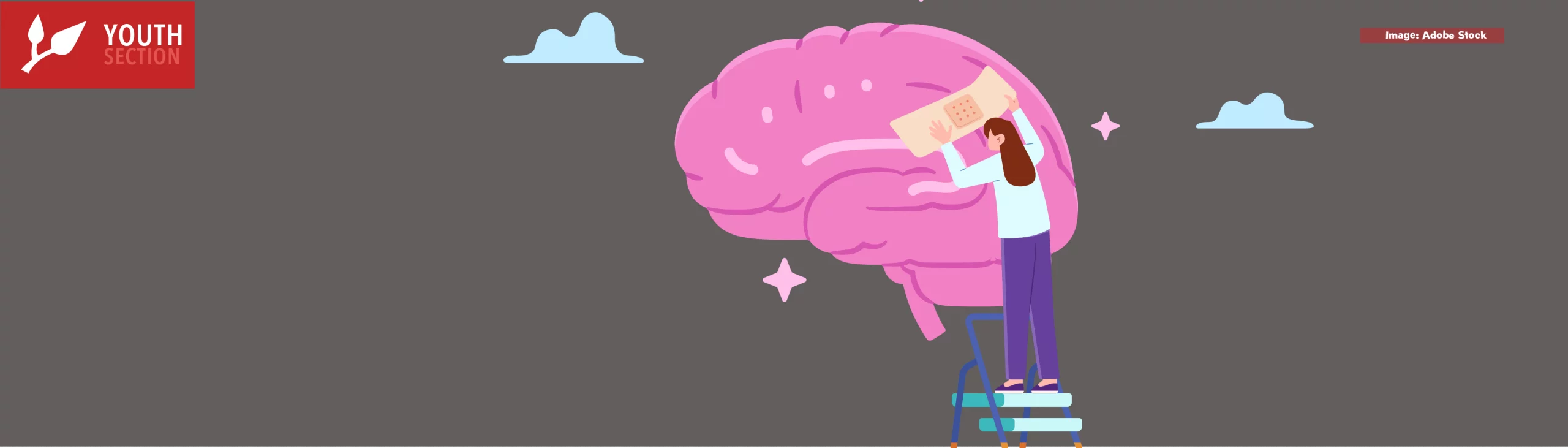
Against this backdrop, it seems almost incongruous that AI has been linked to mental health concerns among students. A 2025 Frontiers study found that AI and its larger universe have been driving anxiety and depression symptoms in students and employees[2]. This is concerning when mental health issues, particularly among adolescents, are already on the rise[3].
An AI-Powered Internet: Underneath the Glitter
The primary cause of mental turmoil seems to be connected to online technostress. Some researchers find that the AI boom has led to more instances of doomscrolling and digital burnout[2].
The advent of fascinating and highly shareable content (think AI-edited images and futuristic videos) keeps people hooked for hours on end. NPR recently reported on AI-generated social media: a possibility that stretches reality into an almost unrecognizable form. OpenAI’s new Sora app offers short-form AI-created videos: funny, surreal, and addictive[4].
Depending on the reception to such advancements, the time spent online may only increase. A 2025 Scientific Reports study found that social media addiction is connected to mental health, with worse outcomes for those who face insomnia or sleep problems[5].
This seems ominous for students, a population already ridden with poor sleep quality and short sleep duration. Continued challenges can also lead to a decline in cognitive functions, manifesting as impaired concentration in the classroom[6].
An Insecure Future in an AI-Dominated World
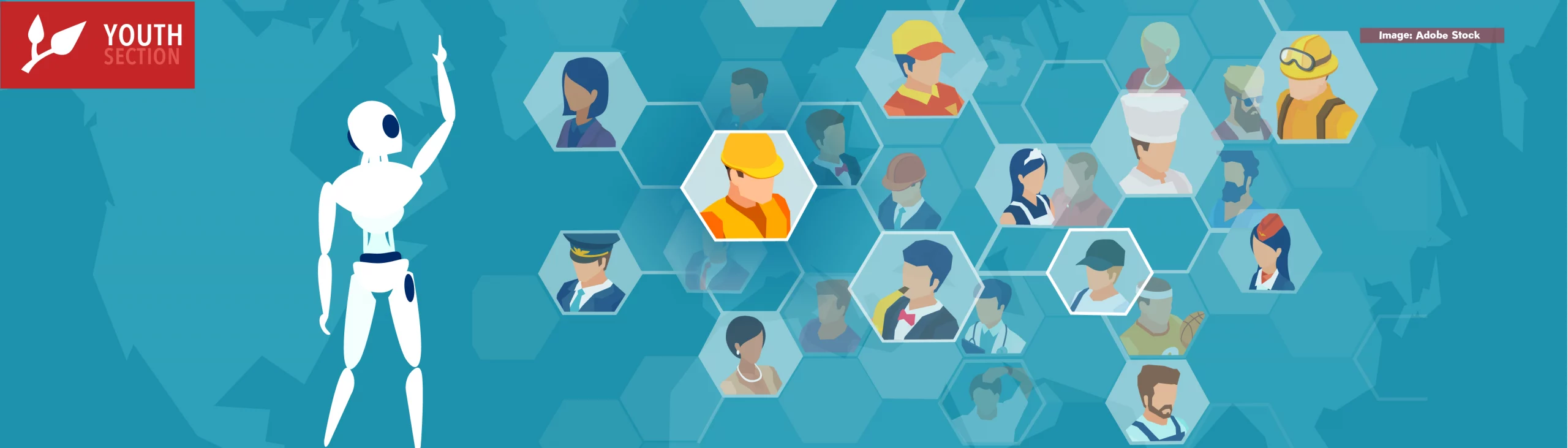
Another connection between AI and poor mental health stems from the psychological effects of all that automation. Recent research studies find that many students are paranoid about job security in an AI-led world. If tools can do everything (and also quickly and accurately), what does that say about their future employment potential?
Some scholars also note that organizational AI adoption can trigger employee depression in environments that don’t prioritize psychological safety[7]. Massive technological transitions like these almost always trigger uncertainty, which confident and empathetic leadership must address.
In its absence, current and future professionals are left battling insecurities about fewer jobs and higher redundancies. The scenario seems bleaker for students from cultural minorities, who may face discrimination under AI tools that screen job applications.
ABC News recently reported that many Australian employers have started using artificial intelligence for screening and shortlisting candidates[8]. The system can enable discrimination against certain communities. UN Women acknowledges the grim reality of AI gender bias. Imagine being passed over for a job you’re well-qualified for only because a ‘smart’ tool decided so[9].
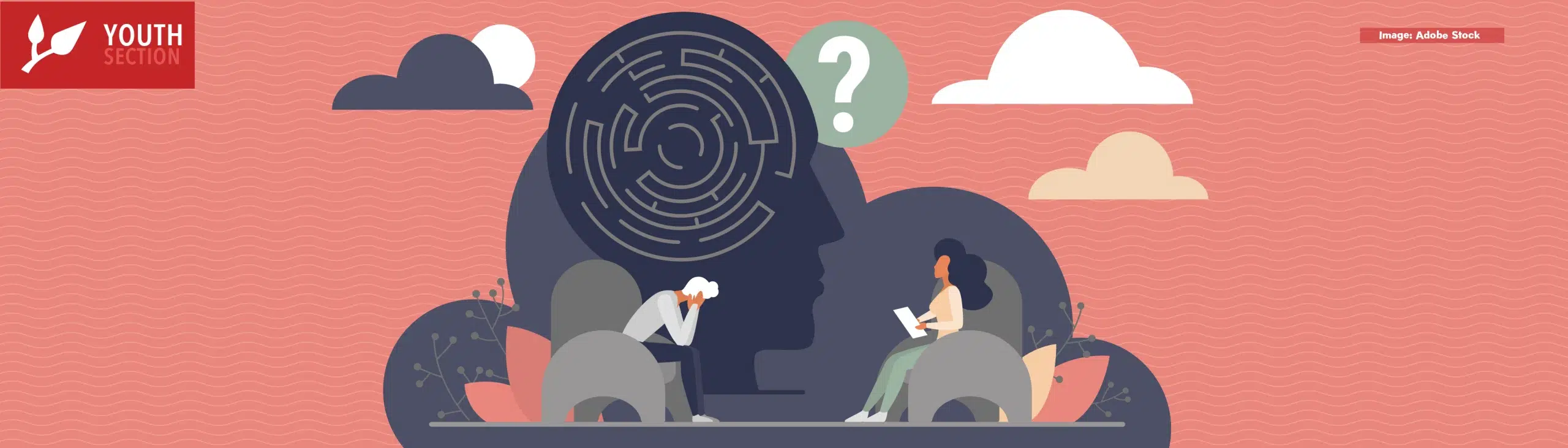
Fortunately, educators and counselors are stepping up to support students who are facing distress due to such biases. Professionals who pursue a master’s in clinical mental health counseling now learn cultural competencies to better support individuals and groups (such as families)[10].
Walsh University notes that this knowledge can help mental health counselors support diverse clients with managing behavioral disorders. They feel equipped to address deeper issues of racial and cultural identity, which are sadly prevalent (or even heightened) in a world where AI makes numerous decisions.
Lifestyle Edits to Manage Your Mental Health
To stay motivated and positive in this new world, taking control of mental health will be non-negotiable. As a student, consider making a few lifestyle modifications. They will help you embrace AI as a support system, not a threat to your present sanity or future career.
- Resist the urge to hand over decision-making roles to AI for academic or creative pursuits. Instead, explore these tools to uncover new themes that advance your research and ensure you have a holistic understanding of the subject. Doing this will help you stay in control and strengthen professional skills, especially critical thinking, to get ahead.
- Using AI chatbots and companions for therapeutic purposes is a gray area. Psychology Today finds that such agents are not equipped for crisis situations and often engage in sycophancy over therapy[11]. Seek support from a professional for mental health struggles, remembering that any associated stigma is completely unnecessary.
- Think about limiting the time you spend online, especially on social media. It might seem patronizing, but the evidence is too compelling to be ignored. Verywell Health recommends restricting social media time to less than two hours a day[12]. It is best to avoid browsing immediately after waking or before going to bed.
New technologies frequently lead to social and psychological upheavals as people adopt them at varying paces. The emergence and acceptance of AI have been so overwhelming that the mental health effects we discuss are not entirely surprising.
As a student or a professional, you can benefit from using this technology cautiously, with built-in checks, and while staying attuned to how it affects your psyche.
References
1. McKinsey, 2025, “The state of AI in 2025: Agents, innovation, and transformation”, November 5, 2025. https://www.mckinsey.com/capabilities/quantumblack/our-insights/the-state-of-ai
2. Daniela-Elena Lițan, “Mental health in the “era” of artificial intelligence: technostress and the perceived impact on anxiety and depressive disorders—an SEM analysis,” Frontiers in Psychology, 2025. https://www.frontiersin.org/journals/psychology/articles/10.3389/fpsyg.2025.1600013/full
3. “Prevalence of Depression Increased Over Last Decade,” US News & World Report, accessed December 9, 2025. https://www.usnews.com/news/health-news/articles/2025-04-22/prevalence-of-depression-increased-over-last-decade
4. Geoff Brumfiel, “Kiss reality goodbye: AI-generated social media has arrived,” NPR, accessed December 9, 2025, https://www.npr.org/2025/10/03/nx-s1-5560200/openai-sora-social-media
5. Arif Jameel, Wenjing Guo, Abid Hussain, Shahida Kanwel, and Noman Sahito, “Exploring the mediating role of insomnia on the nexus between social media addiction and mental health among university students,” Scientific Reports, 2025. https://www.nature.com/articles/s41598-025-03163-9
6. Yubing Xu, Linglong Qin, Shiman Wen, Xuanyu Zhang, Yanling Zhou, and Yanling Zhou, “Effects of sleep on multimodal cognitive functioning in college students,” Frontiers in Psychiatry, 2025. https://www.frontiersin.org/journals/psychiatry/articles/10.3389/fpsyt.2025.1637699/full
7. Byung-Jik Kim, Min-Jik Kim, and Julak Lee, “The dark side of artificial intelligence adoption: linking artificial intelligence adoption to employee depression via psychological safety and ethical leadership,” Humanities and Social Sciences Communications, 2025. https://www.nature.com/articles/s41599-025-05040-2
8. Lucia Stein, Damien Carrick, “AI job recruitment tools could ‘enable discrimination’ against marginalised groups, research finds,” ABC News, 2025 https://www.abc.net.au/news/2025-05-08/ai-job-recruitment-tools-could-enable-discrimination-research/105258820
9. “How AI reinforces gender bias—and what we can do about it,” UN Women, 202 https://www.unwomen.org/en/news-stories/interview/2025/02/how-ai-reinforces-gender-bias-and-what-we-can-do-about-it
10. Walsh University, “Online Master’s in Clinical Mental Health Counseling,” accessed December 9, 2025, https://online.walsh.edu/programs/counseling/clinical-mental-health-counseling-msed#getyourguide
11. Michelle Quirk, “10 Things to Know Before Using AI Chatbots for Therapy,” Psychology Today, 2025 https://www.psychologytoday.com/us/blog/urban-survival/202511/10-things-to-know-before-turning-to-ai-chatbots-for-therapy
12. Alyssa Hui-Anderson, “Is There a ‘Healthy’ Amount of Time to Spend on Social Media?”, Verywell Health, 2025. https://www.verywellhealth.com/social-media-timing-8573175








Comments are closed.