
Did you know that art has the power to cleanse the dust of daily life off of you? Well, Pablo Picasso believed so! He pointed towards the renewed sense of awe and wonder that art affords amid the drudgery of modern living. It is good to remind yourself that life is not meant to be mechanical.
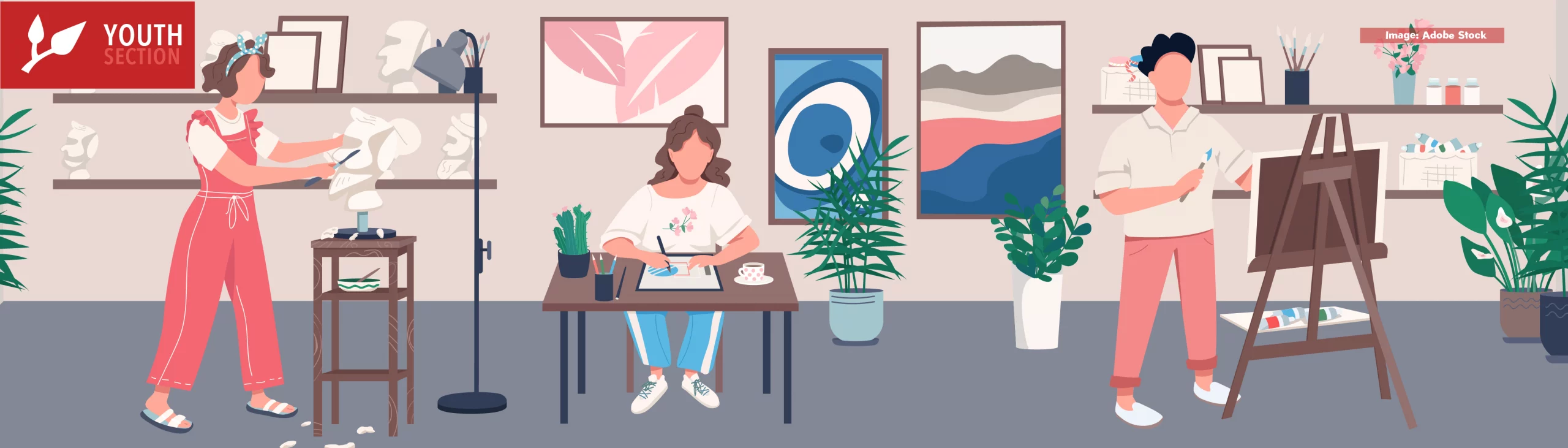
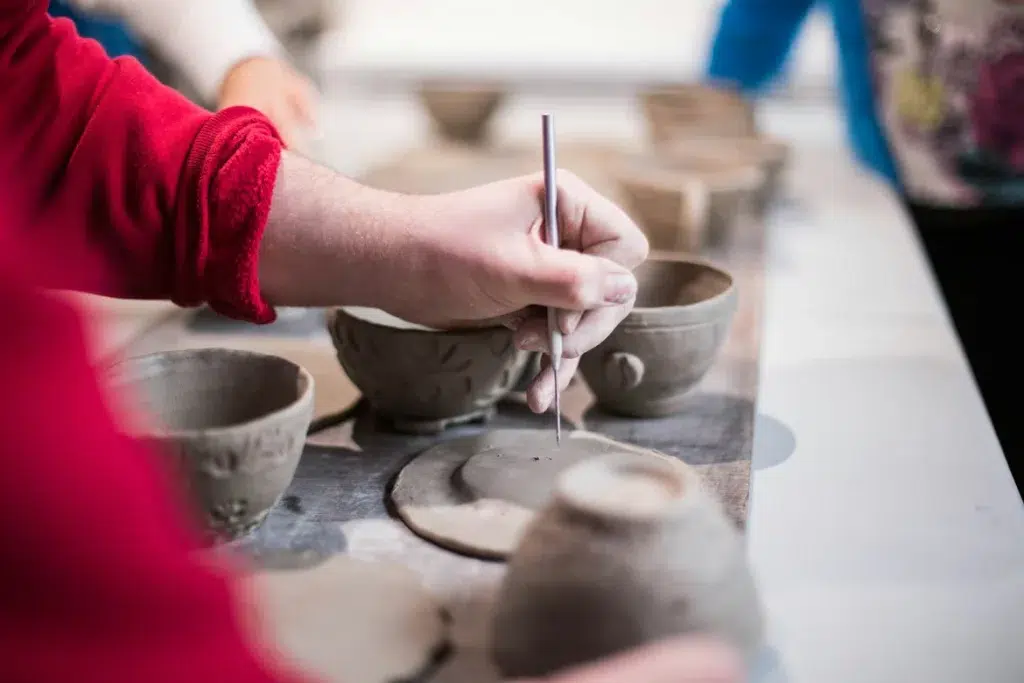
For the most part, the arts exist to remind one and all that it is possible to find inspiration and beauty again. From the obvious visual arts to performing and literary variants, each creative pursuit provides students with an avenue to express themselves.
Fortunately, the process is such that many end up discovering their true self, and with that, confidence and leadership capabilities. Let us examine the reasons behind it, though. This article will go into great detail about how creative arts programs help students develop their leadership and self-assurance.
The Transformative Confidence Students Gain from the Arts
Do you enjoy scribbling on the walls? Is singing for your school choir or freely dancing through an event your passion? If yes, then you surely felt a unique sense of freedom, almost like you can trust yourself more, right?
That is fairly typical since every artistic medium specializes in removing the fear of failure or comparison. Miles away from perfection, creative pursuits are essentially about self-expression.
No wonder participating in the arts has a major impact on emotional well-being, according to numerous studies. Researchers found an unmistakable connection between psychological well-being and various forms of art in an empirical study (2024). It was conducted on 430 college-age students from China.1
Among all things, students experienced heightened emotional health and a stable sense of identity. This transformation is not an easy fix. It results from the fact that art offers repeated meaningful opportunities for growth and emotional expression.
Naturally, the meaningful opportunities lead to equally meaningful milestones. Here is how artistic spaces help build student confidence:
- Completing a creative work that may have seemed impossible before is a relief in itself.
- Overcoming fear through constant practice provides reassurance.
- Being showered with encouragement from peers/mentors boosts motivation.
Gradually, the student communicates their ideas more authentically. Even mistakes become good news by turning into experimentation and room for growth. This leads to a healthy sense of understanding, as art no longer remains a pursuit for perfection.
Arts Education As a Pathway to Strong Student Leadership
What happens when time is of the essence and the budget is limited in schools? Well, the first thing that goes out of the window is art. Sadly, artistic disciplines do not undergo high-stakes testing. Hence, the classes are often vulnerable when the pressures are high.
The truth, however, is that children often enjoy all kinds of arts. They are engaging, offer immediate rewards, and foster collaboration. In the process, confidence develops, but that is just the beginning. Many students end up with effective leadership skills through various art forms.
How? Think about leading a theatrical play or coordinating a choir. Now, the process is often not easy. Artistic fields require out-of-the-box thinking and clear communication. Students have to listen actively, solve problems/conflicts, and even support peers.
Again, there is also a degree of risk-taking involved. All in all, students get a real taste of true leadership. Let us look at the different leadership lessons waiting to be discovered across art forms:
- Group projects involve careful planning and time management.
- Collaborative activities require active listening and negotiation.
- Stage-based performances build confidence under pressure.
- Art critiques nurture constructive feedback and a growth mindset.
- Community exhibitions encourage civic responsibility.
Such lessons translate directly into academic, professional, and community settings. Students who lead in the arts often also become class representatives, mentors, and volunteers. They learn to recognize talent in others and ways to bring about group success.
Similarly, programs designed for educators, such as an online Ed.D. degree, allow aspiring leaders to gain advanced knowledge along with the digital dimension of collaboration. Online study is especially pivotal in equipping students for remote team management.
Many can figure out new ways for integrating technology into arts programs. However, there is room for more, much beyond the foundational skills. As Marymount University shares, leaders should be able to transform and adapt so they can meet the demands of an ever-changing working environment.
Each arts project students lead helps them navigate unpredictability with resilience. That is what completes the cycle of courage, making leadership both confident and flexible.
Practical Considerations to Design Arts Programs for All
An arts program that truly benefits all students? Well, that takes a bit of thoughtful planning. Offering art classes is not enough; they must also be inclusive and emotionally supportive of each student’s unique needs.
If designed well, such programs hold the potential to teach technique as well as nurture a sense of belonging and creativity. Just take a 2024 study as an example. It found that university students enrolled in arts-based well-being programs experienced a 32% rise in self-efficacy and self-expression skills. 2
This happened when the students were permitted to explore varied art forms, not just rigid techniques. Since flexible participation is powerful, let us dive into the key principles for an inclusive arts program:
Nudge Students Toward Expression, Not Perfection
Arts play their role best when the student is free to explore their boundaries. In other words, they must be able to express themselves in any manner they want.
One analysis singles out arts programs as able to improve emotional well-being and reduce stress. Nearly 83.3% of the studies (20 out of 24) showed better mental health.3 Make emotional safety essential, not optional, and students will flourish.
Let the Instruction Methods Be Flexible
Another characteristic of a well-rounded arts program is that it is able to make room for all kinds of students. In a recent research, even children with disabilities were able to enjoy arts programs when strategies were slightly modified. 4
This points to the fact that arts programs need not be limited to classroom settings. They can be undertaken across community or hybrid settings to include diverse learners. Similarly, digital art tools can also be used for greater inclusion.
Incorporate Arts as a Part of Holistic Education
It’s downright tragic when arts programs are treated as some after-school luxury that only a handful of students get to enjoy. It’s high time that they are made a part of every child’s holistic development.
Even real-world skills should be taught during arts classes. As students participate in collaborative projects and creative problem-solving, they associate the arts with real life.
Keeping busy is a phrase you should not normally have to associate with the arts. From a paintbrush to a mic, the purpose of each artistic tool is to hand over confidence and leadership.
That is exactly what the future of education must look like. No more flawlessly standardized humans! It is now time to produce bold original thinkers who know how to express themselves creatively.
References
- National Library of Medicine. 2024. Psychological Benefits of Arts Participation for Emerging Adulthood: A Pathway to Flourishing. https://pmc.ncbi.nlm.nih.gov/articles/PMC11200805
- National Library of Medicine. 2024. Potential of Arts Education Initiatives for Promoting Student Mental Health and Well-Being. https://pmc.ncbi.nlm.nih.gov/articles/PMC10948512
- ScienceDirect. 2025. The Impact of Creative Arts-Based Interventions for Mental Health in Conflict-Affected Contexts. https://www.sciencedirect.com/science/article/pii/S2666560325000313
- C.E.P.S Journal. 2025. Arts Education for Children with Disabilities: A Systematic Literature Review. https://files.eric.ed.gov/fulltext/EJ1484607.pdf









Comments are closed.