
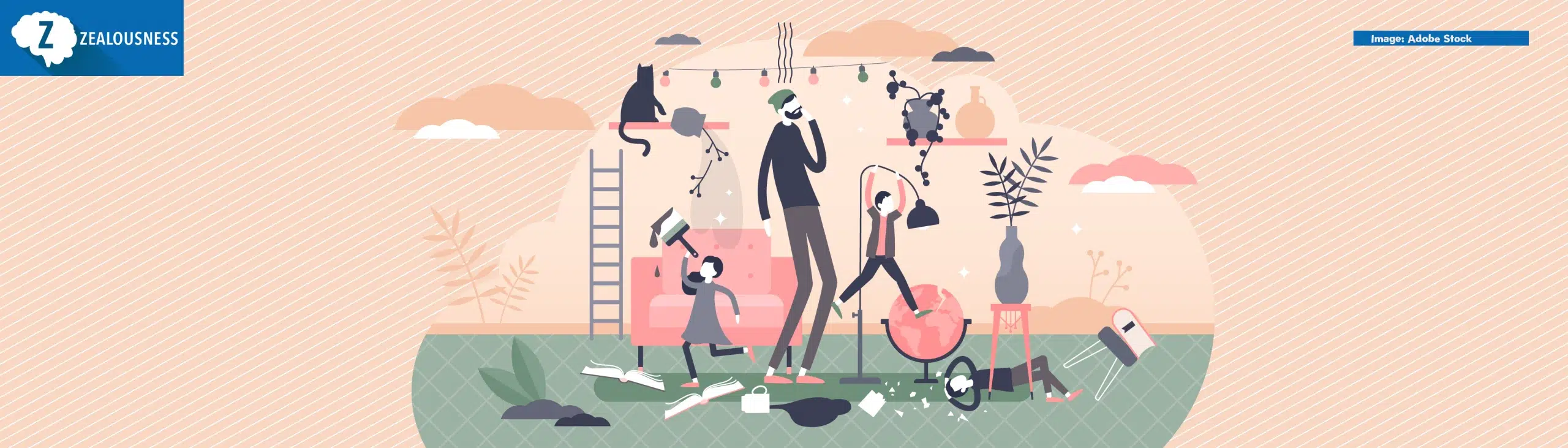
Before you raise another human, you must face the first child you were ever responsible for, which is YOURSELF.
Most people skip this step, allowing cycles of trauma to repeat. That’s how children inherit wounds they didn’t earn.
As I grew up, I realized how the world always expects you to be “mature” while never teaching you how to be or even the real meaning behind that simple word. Consequently, many adults carry the weight of an unhealed inner child into their daily lives, making inner child healing the most vital step any parent can take.
The Science Behind the Cycle
Unresolved trauma never stays hidden; it eventually leaks onto the next generation. Children are remarkably perceptive. They absorb emotional patterns, coping mechanisms, and relational blueprints from their caregivers, often before they can even utter a letter.
Research in attachment theory shows that early relationships build a child’s understanding of safety and self-worth. When parents operate solely from unhealed wounds, specific damaging patterns often emerge.
How Unhealed Wounds Shape Parenting
Anxious attachment: A parent with abandonment wounds may become overprotective. This inadvertently teaches the child that the world is unsafe.
Emotional unavailability: Parents who never learned to process their own pain often shut down. Their children learn that feelings are inconvenient or dangerous.
Perfectionism: A parent raised with conditional love might unconsciously pass on the message that love must be earned. Their child learns that their worth depends on achievement.
Explosive anger: In these environments, children develop hypervigilance. They learn to “walk on eggshells” to survive a parent’s unregulated nervous system.
These aren’t deliberate choices. They are unconscious patterns ~ the only maps these parents know and follow. This is why intentional inner child healing is required to redraw those maps.
What I’ve Learned About Inner Child Healing and Self-Parenting
Moving forward, parenting yourself won’t be all rainbows and butterflies. It’s messy and very humbling. It means sitting with your inner child when she’s panicking, instead of outsourcing comfort to someone who doesn’t even know the full story. This is the core of inner child healing.
It’s learning boundaries because no one taught you.
It’s treating your needs like they don’t matter, even when your inner voice tells you they don’t. It’s reteaching yourself the four pillars every healthy parent is supposed to give: love, safety, discipline, and emotional regulation.
And I’m not saying this from a distance. I’ve lived in that space where the people around me acted like “saviours” without giving actual support. I know how isolating it feels when your emotions are too heavy for the room. That’s when I realized “I have to become the person I needed”.
What Re-Parenting Actually Looks Like
In psychology, inner-child healing means consciously providing yourself with what you lacked growing up. It’s not about blaming your parents or dwelling in victimhood. It is about taking responsibility for your own healing so you don’t unconsciously pass it forward.
Practically, this can mean;
● Recognizing when you’re reacting from a childhood wound rather than the present moment
● Learning to self-soothe instead of requiring others to manage your emotions.
● Establishing boundaries that protect your peace.
● Speaking kindly to yourself
● Seeking therapy or support to understand your patterns
● Being willing to feel uncomfortable emotions instead of numbing or avoiding them
When you parent yourself, you stop being desperate for someone to save you. You stop acting from abandonment wounds. You stop repeating the chaos you grew up with. You become someone steady, grounded, self-led, basically someone who won’t project their storm onto another soul.
The Ripple Effect: Breaking Generational Cycles
Here’s what changes when parents do their own work:
Children of healing parents understand that it’s okay to feel things. They learn that emotions can be handled without falling apart completely. They internalize the belief that they are worthy of love simply for existing.
These children don’t inherit the anxiety or shame their parents once carried. The cycle breaks. You become capable of being a parent out of clarity and healed intention, rather than fear or obligation.
The Summary
Before raising a child, raise yourself. Before giving a child safety, build it within your own mind. Before guiding someone else, guide the forgotten pieces of your own heart back home.
That’s what breaking generational cycles actually looks like. It is not perfection, but consciousness. It is not being flawless, but being accountable.
Becoming your own parent is the prerequisite for becoming someone else’s safe place. That too is a powerful lesson: that healing is always possible and accountability is an act of love.
Have you experienced the impact of generational trauma? Share your thoughts in the comments below!!








Comments are closed.