
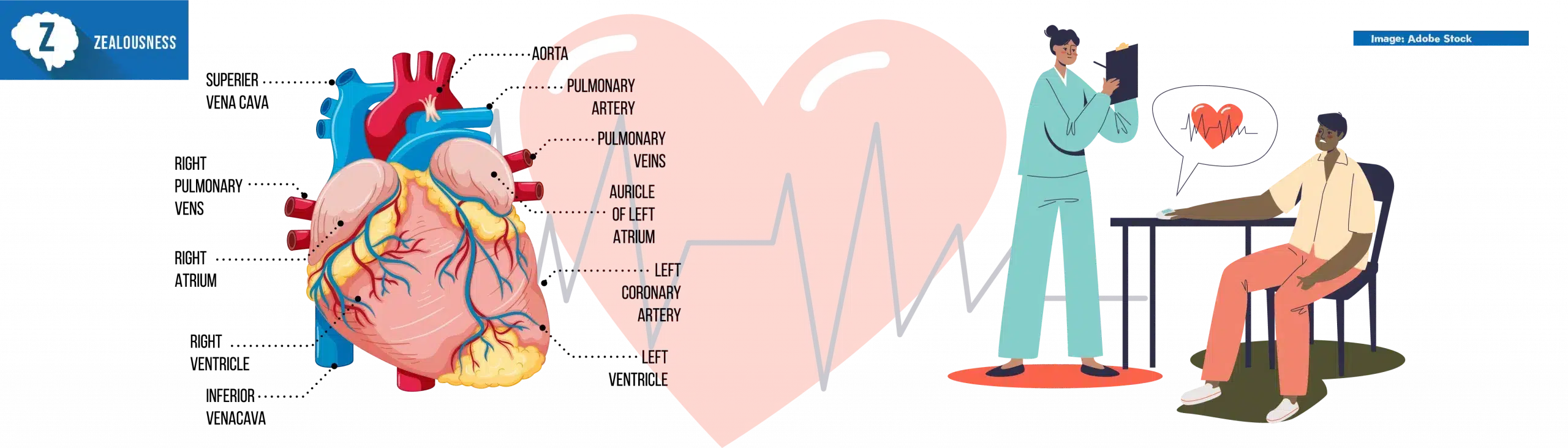
If you put your hand on your chest, you will feel a constant beating sensation. That sensation is your heart! Your heart is an organ, located in your chest, that works really hard all day and all night long. It never takes a break! You might notice that when you are playing sports or simply running, your heart starts beating faster. On the other hand, when you are resting or sleeping, your heart beats more slowly and calmly. Both are very normal sensations, and they are essential functions for keeping you active and healthy!
What is the heart, and how does it work?
Your heart is a muscle, about the size of your fist. It’s your body’s “engine,” in charge of pumping blood containing the proper amount of oxygen throughout your body. The right side of your heart receives the blood that has already passed throughout your body and is returning. This blood is lacking oxygen, as it has been completely distributed. This blood is then sent to the lungs, where it is filled with oxygen, and then sent back to the left side of the heart. After that, the heart pumps this newly oxygenated blood out of the left side and back into your body.
What are some of the main parts of the heart?
The two upper chambers of the heart are called atria. They are commonly referred to as the right atrium and left atrium. They are the first to be filled up with deoxygenated blood returning from the bloodstream and oxygenated blood returning from the lungs. These two chambers are essential for proper blood flow. The atria are connected to the ventricles, which are the lower two chambers. They are commonly referred to as the right ventricle and left ventricle. The ventricles are important as they are the last place where blood fills up before exiting to the lungs or the rest of the body.
It is important to note that blood flow through the heart is controlled by valves. Valves are flaps that are found in between the different chambers of the heart and between the heart and the rest of the bloodstream. Valves are like doors that open and close to regulate when and how fast blood can enter the heart, move throughout the heart, and exit the heart. They are essential for proper circulation and keeping us healthy!
Arteries are like little tubes that transport blood out of the heart. The main artery in the heart is known as the aorta. The aorta is a large artery that carries blood full of oxygen out of the heart to the rest of the body. This blood goes to all the necessary organs, keeping the entire system up and running! It is important to mention that veins, contrary to arteries, are the tubes through which blood passes in returning to the heart.
How to take care of your heart?
Now that we know the heart is really important for your health, it is essential to know how to best take care of it. Here are some tips to keep your heart beating vigorously:
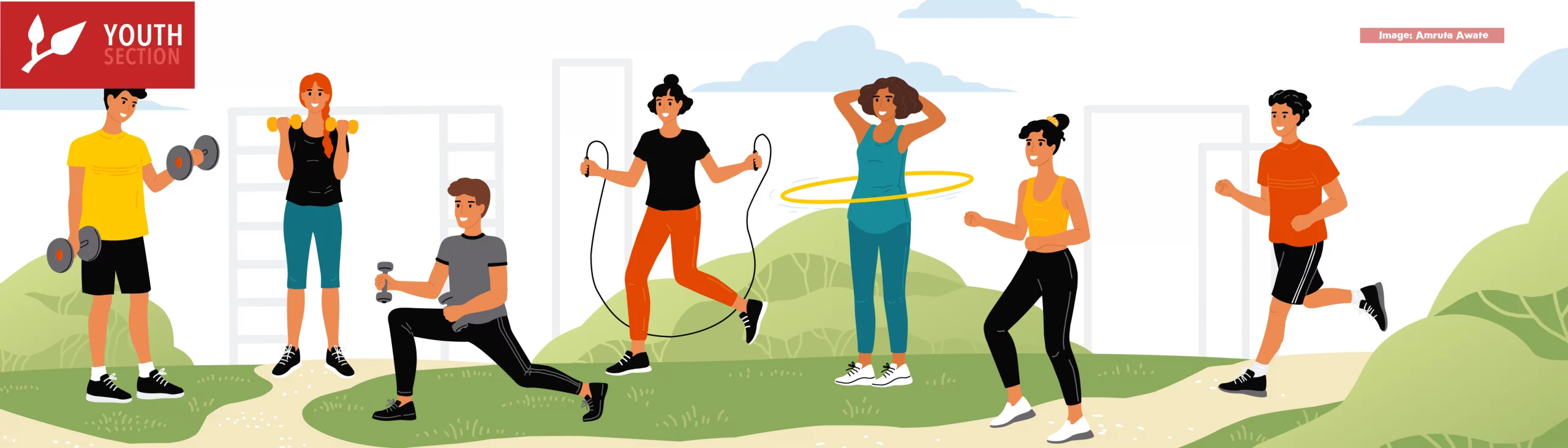
- Stay active! Exercise keeps your heart muscle fit and strong.
- Eat healthy meals. Remember to get your daily intake of vegetables, fruits, grains, and protein. Limit junk food as much as possible.
- Get plenty of sleep. A good night’s rest will help your body (heart included) be good and ready for the next day.
- Drink a lot of water. It will help the heart maintain blood flow.
- Avoid smoking and vaping. Both are very damaging to heart tissue.
References
- Cleveland Clinic. “Heart: Anatomy & Function.” Accessed February 3, 2026. https://my.clevelandclinic.org/health/body/21704-heart.
- HealthyChildren.org. “Keep Your Child’s Heart Healthy: Habits to Start Early.” American Academy of Pediatrics. Accessed February 3, 2026. https://www.healthychildren.org/English/health-issues/conditions/heart/Pages/Heart-Disease.aspx.
- InformedHealth.org. “In Brief: How Does the Blood Circulatory System Work?” Institute for Quality and Efficiency in Health Care (IQWiG). Last modified November 21, 2023. https://www.ncbi.nlm.nih.gov/books/NBK279250/.
- Lurie Children’s Hospital. “How to Raise a Heart-Healthy Child: Tips from Pediatric Cardiologists.” Last modified February 18, 2025. https://www.luriechildrens.org/en/blog/heart-health-for-kids-tips-for-parents/.
- National Heart, Lung, and Blood Institute. “How the Heart Works – How Blood Flows through the Heart.” National Institutes of Health. Accessed February 3, 2026. https://www.nhlbi.nih.gov/health/heart/blood-flow.
- Nemours KidsHealth. “Your Heart & Circulatory System.” Accessed February 3, 2026. https://kidshealth.org/en/teens/heart.html.SEER Training. “Structure of the Heart.” National Cancer Institute. Accessed February 3, 2026. https://training.seer.cancer.gov/anatomy/cardiovascular/heart/structure.html.









Comments are closed.