
The growing number of freelancers, gig workers, and entrepreneurs is changing how we think about careers. This shift offers incredible flexibility and autonomy, but it also brings a significant challenge: managing an income that can fluctuate from month to month. Navigating these financial ups and downs takes more than traditional budgeting; it requires creative strategies and a proactive mindset to build stability on your own terms.
The Nature of Variable Income
A variable income is any earnings stream that isn’t a fixed, predictable salary. This includes freelancers, commissioned salespeople, small business owners, and anyone participating in the gig economy. The main difficulty isn’t necessarily earning less, but rather the unpredictability of cash flow. One month might bring a windfall from a large project, while the next could be a struggle to cover basic expenses. This inconsistency makes financial planning, from paying monthly bills to saving for the future, feel like hitting a moving target. As financial expert Daniel Tilipman has noted, the structure of the gig economy can present unique debt challenges for workers who lack the safety net of a steady paycheck. Successfully managing this reality starts with acknowledging it and building systems specifically designed for it.
Innovative Budgeting Methods
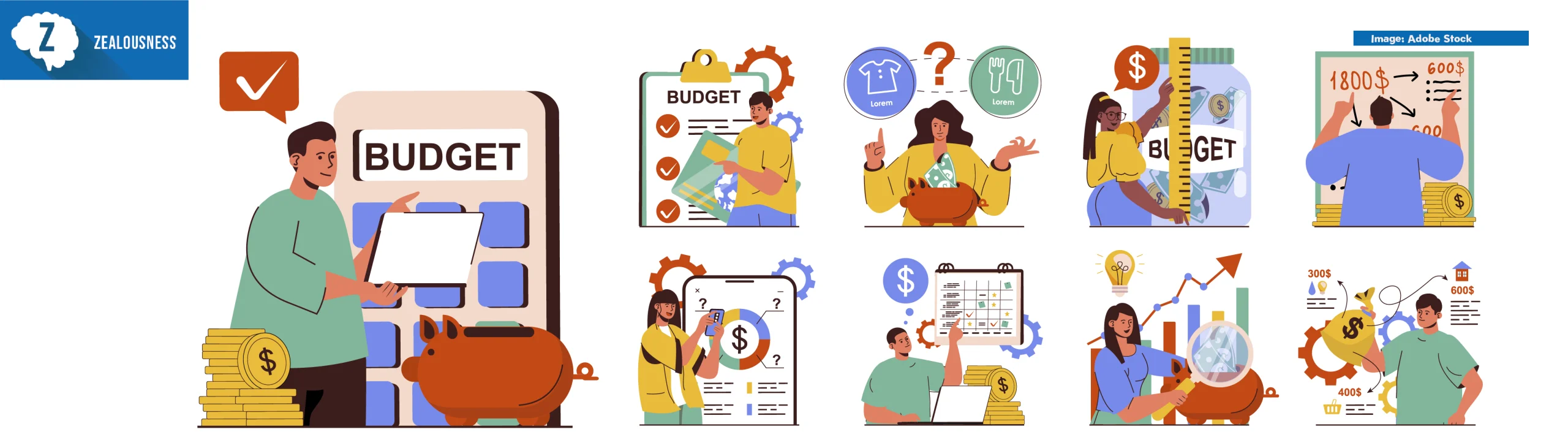
Standard budgeting advice often falls short when your income changes every month. Instead of trying to fit a variable income into a fixed budget, adapt your budgeting method to your reality. One of the most effective strategies is to pay yourself a consistent “salary.”
First, create two bank accounts: a “business” account where all your income is deposited and a “personal” account for your expenses. Next, determine your salary. Look at your income over the last 6-12 months and calculate your average monthly earnings. Set your “salary” at a conservative, reliable amount you can transfer from your business account to your personal account each month. In good months, the extra cash stays in the business account, building a buffer to cover your salary during leaner times.
Another approach is to adapt the 50/30/20 rule, which suggests allocating 50% of income to needs, 30% to wants, and 20% to savings. For variable income, base these percentages on your lowest-earning month from the past year. This creates a “baseline budget” that you know you can cover. Any income above that baseline can then be strategically allocated to paying down debt, boosting savings, or investing. There are many helpful guides for budgeting with a variable income that offer different frameworks to help you find one that works for you. Some people find success by creating a prioritized list of expenses and funding them in order as money comes in throughout the month.
Leveraging Financial Technology
Modern financial technology offers powerful tools for automating and simplifying the management of a fluctuating income. Budgeting apps can sync directly with your bank accounts, automatically categorizing your spending and showing you exactly where your money is going in real time. This eliminates the tedious work of manual tracking and provides a clear picture of your financial health at a glance.
Many apps are designed specifically for the challenges of irregular cash flow. Some allow you to set different spending targets for various categories, while others help you implement a zero-based budget where every dollar is assigned a job. Beyond budgeting, technology can also help you save. Automated savings apps can round up your purchases to the nearest dollar and deposit the change into a savings account or make small, regular transfers that you barely notice. This “set it and forget it” approach helps build your savings consistently, even when your income isn’t.
Support for Debt Management
Debt can be particularly stressful with a variable income, as a slow month can make it difficult to meet minimum payments. The key is to be proactive rather than reactive. Building a dedicated emergency fund is your first line of defense. Aim to save at least three to six months’ worth of essential living expenses. This fund allows you to cover your bills during an income dip without having to resort to credit cards or loans.
If you are already carrying debt, having a clear strategy is essential. Two popular methods are the debt snowball (paying off the smallest balances first for psychological wins) and the debt avalanche (tackling the highest-interest debt first to save money). Many find it helpful to read personal accounts of how to budget to find motivation and practical tips. If you anticipate having trouble making a payment, contact your creditors before you miss the due date. Many are willing to work with you to set up a temporary payment plan if you communicate openly.
Designing Your Financial Future
Managing day-to-day cash flow is only one piece of the puzzle. With a variable income, you are solely responsible for planning your long-term financial future, including retirement. The good news is that there are retirement accounts designed specifically for self-employed individuals, such as a SEP IRA or a Solo 401(k). These accounts often allow for higher contribution limits than traditional IRAs and offer flexibility for making contributions.
Think about your savings in tiers. Your first priority is your emergency fund. Once that’s established, focus on a separate savings account for taxes. A common rule of thumb is to set aside 25-30% of every payment you receive. After that, you can focus on contributing to retirement and saving for other major goals, like a down payment on a house or investing in your business. This structured approach transforms saving from an afterthought into an integral part of your financial system.
Embracing a variable income means becoming the architect of your own financial stability. Using these creative solutions and designing systems that work for you helps you enjoy the freedom of non-traditional work while building a secure and prosperous future.