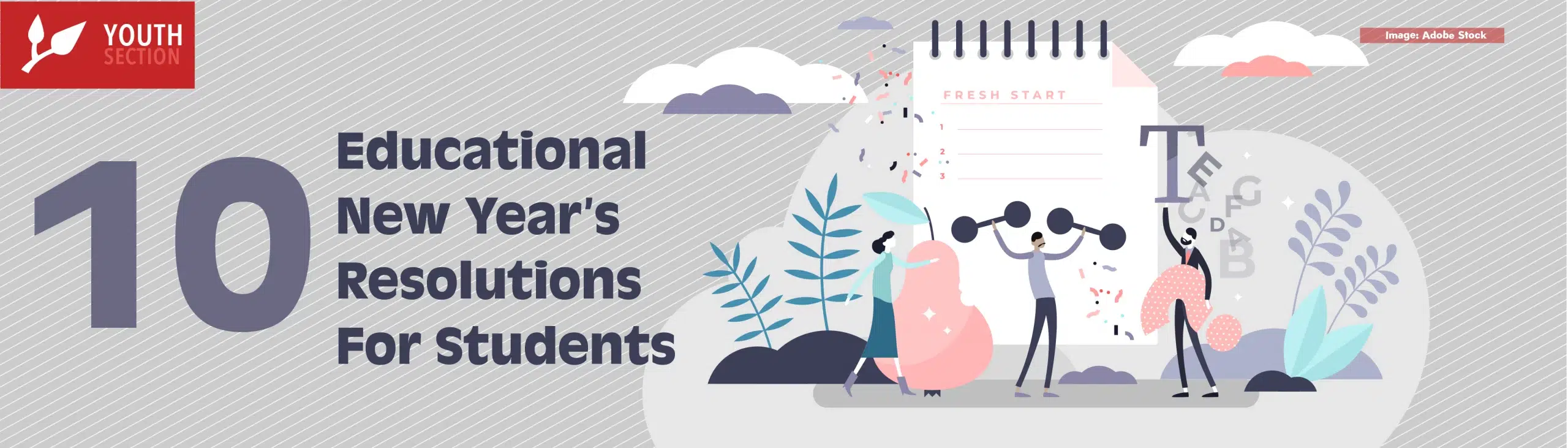
Making a New Year’s resolution is all about striving for the opportunity to change. The New Year gives students a chance to reevaluate their grades, their understanding of their subjects, and to examine their entire outlook. Instead of asking tough questions like ‘Why do I go to school?’ or ‘Am I a negative person?’, consider gentler, guiding questions such as ‘What motivates me to learn?’ or ‘What small changes could help me enjoy school more?’.
Focusing on positive adjustments can open doors to making life better and finding new reasons to enjoy going to school.
This article is dedicated to all students, but especially to those having trouble in school and in life. There is help at your school and in your community. The time is now to take advantage of your resources and allow people to help you achieve your goals, as you learn to change and grow in the process.
- Talk to your parents or guardians about what you are going through. Be courageous. Write down your plan to show your guidance counselor and teachers when you go back to school in January.
- Show your guidance counselor and teachers your questions and concerns. Explain to them your reasons for disliking school and your negative attitudes about life. Ask them for advice so you can change, and listen to it.
- In class, ask your teacher if you can sit in the front so you can pay attention and learn.
- Get your rest at night. Embrace the identity of being ‘a rested learner’ to reinforce the importance of sleep in your routine. Set your alarm and spend less time on social media. Nourish your body by eating a healthy breakfast, lunch, and dinner every day. As an ‘energetic and mindful mover,’ find time to exercise regularly. Write down the moments when you feel confused and counteract those negative thoughts with positive affirmations, such as, ‘I will make it through this, and I will be okay.’
- Take good notes in class, read your textbook, and study in a quiet place. In your free time, read positive and uplifting YA books or magazines. Constantly educate your mind with good things.
- Finish assignments and projects on time.
- End toxic friendships and toxic relationships. Do not be afraid to take control of your life at a young age when someone is causing you pain. Tell your parents or guardians, or other trusted teacher or adult, about your situation. If professional therapy is not accessible, seek assistance through school-based counseling, peer support groups, or helplines that are often available for free. These resources can provide valuable support in handling complex relationships.
- Take advantage of the study hall. This class period is not a break in the school day, but a chance to decompress, organize notes, do homework, and prepare for the last couple of class periods.
- Let go of extracurricular activities you are not passionate about. Take advantage of a maximum of two. Choose the two most important groups in school, and stick to participating in only those.
- Last but not least, find a Bible-based, Christian-based local church. Find trusted youth pastors in the church. Listen to inspirational and upbeat music. The church community is a great way to continue learning, renew your spirit, and train your mind to shift from negative to positive. For students who may not be religious, consider joining school clubs or community groups that promote personal growth and development. Look for activities like volunteering opportunities, book clubs, or mindfulness and meditation groups that offer a supportive and encouraging environment to nurture positivity and resilience.