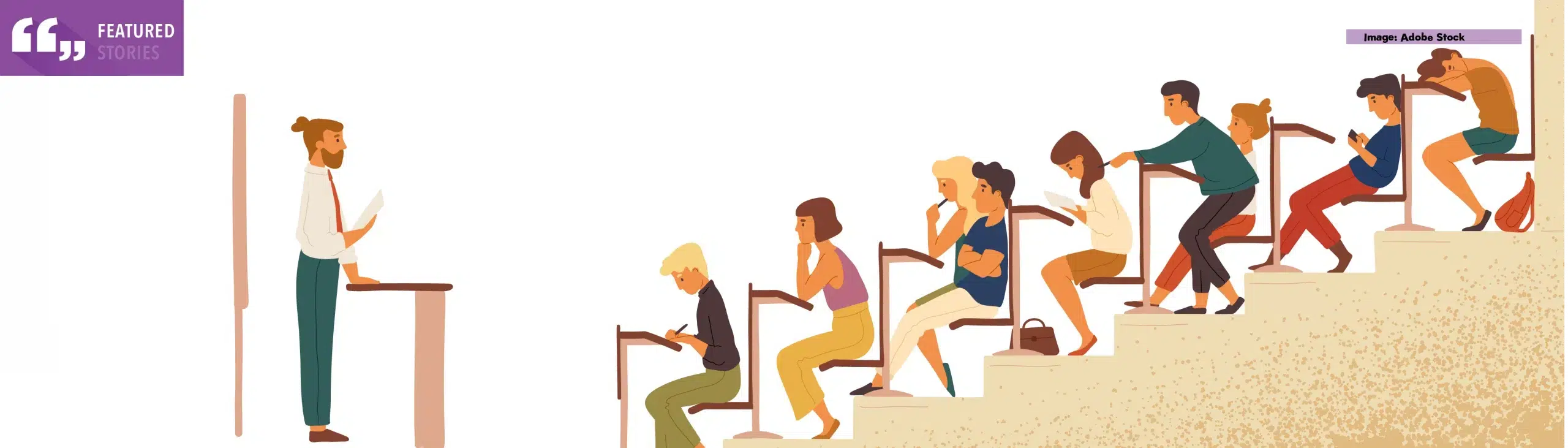
“What’s your name?” “What’s your major?” “Where are you from?” I answered those three questions so many times my first week that I stopped hearing them as questions. It felt perpetual; an endless cycle of introductions, that is what my first couple of days of college felt like. Those interactions, the ones that feel rehearsed and almost fugazi, are the wide net, and you have to cast it. Although, in my experience, I found that the people I met in the most random of ways, for example in line at the dining hall, or randomly by the campus store, were the ones that I reeled in; the meaningful connections, the keepers.
My first year in college, overall, was a very transformative time, as anyone could probably assume. It was my first real experience of full independence. I had to build a routine. I started making to-do lists using my iPhone’s Reminders app, which proved to be very useful, along with Google Calendar. I used Notion to organize my schoolwork, since teachers don’t work together to coordinate work posting on Google Classroom, like in high school. College also helps you mature. I learned self-discipline, holding myself to a high standard, and not slacking off or falling into temptation or laziness.
Regarding academics, the first realization is that there is no one to hold your hand. I had to strategically, and almost flawlessly, divvy up work to meet deadlines. I realized quickly that cramming was not an option. Calculus was the hardest class I took all year, and I walked into the midterm having started studying two days before. I got a B. For the final, I started three weeks out and went to a tutor twice a week, something I never did in high school, because I never needed to. I got an A. The difference wasn’t intelligence or effort in the moment; it was the calendar, preparation, and studying.
I met more people in my first two weeks than in four years of high school, and I’m still close with maybe ten of them. That’s not a failure, that’s the ratio. I also joined Scholars of Finance, which put me in a room with people who were ambitious in the same direction I was, which turned out to matter more than any single event they ran.
Athletically, I played club tennis. I have played tennis since I was seven, but I’d never walked onto a court where nobody had seen me play before. The confidence that came out of showing up consistently was worth more than anything it did for my fitness.
To accelerate my career, I talked to career advisors, built relationships with professors, and networked with upperclassmen. The last group turned out to be the most useful. When I was told, “Start now, not junior year,” it was the first time anyone laid out what the actual path looked like. And it moved my calendar up by a year. That advice is why I spent this June interning at Polen Capital in Boston, building an investor presentation for a fund launch and putting together the data visualizations for a volatility research paper. None of that was on my radar in September.
I ate reasonably well and made a point of not skipping breakfast before a morning class. Mostly, though, I learned about sleep. I took an economics exam on three hours of sleep. Staring at a budget line and a set of indifference curves I’d understood perfectly well the week before, unable to remember which one I was supposed to be tangent to, is not a feeling I’d recommend. Seven hours of sleep is the floor.
I didn’t bring my keyboard to Miami. I figured I’d rent practice rooms, and I never did, not once, all year. I have played the piano since I was seven, and it took me until May to notice it was gone. That’s the part nobody warns you about. Casting a wide net means most of what you pull up goes back in the water, and that’s fine, that’s the point. But some things slip out without you deciding anything at all. This fall the keyboard is coming to campus with me. Year one was about how much I could pick up. Year two is about being deliberate with what I keep.