Organic search is still one of the best ways for brands to grow online over time. But once a business gets bigger, its website often turns into something more complicated. New products and services show up. More locations and pages get added. Categories expand. Content grows. At that point, the simple SEO plan that worked earlier can start to fall apart.
When the site becomes large, brands usually need enterprise SEO. This type of SEO aims to lift search results on big sites without losing control of the basics. It keeps the site healthy in technical terms. It pushes for solid content. It supports clear site structure. It also ties work to results that can be tracked.
I have looked into how search keeps changing. What stands out is that strong brands want SEO that can shift as their sites grow and as customer habits change. Search engines still judge sites on things like usefulness, ease of use, technical soundness, credibility, and the value they give people. A plan that can scale helps a brand handle all of that while the website keeps expanding, not while it starts to hurt rankings.
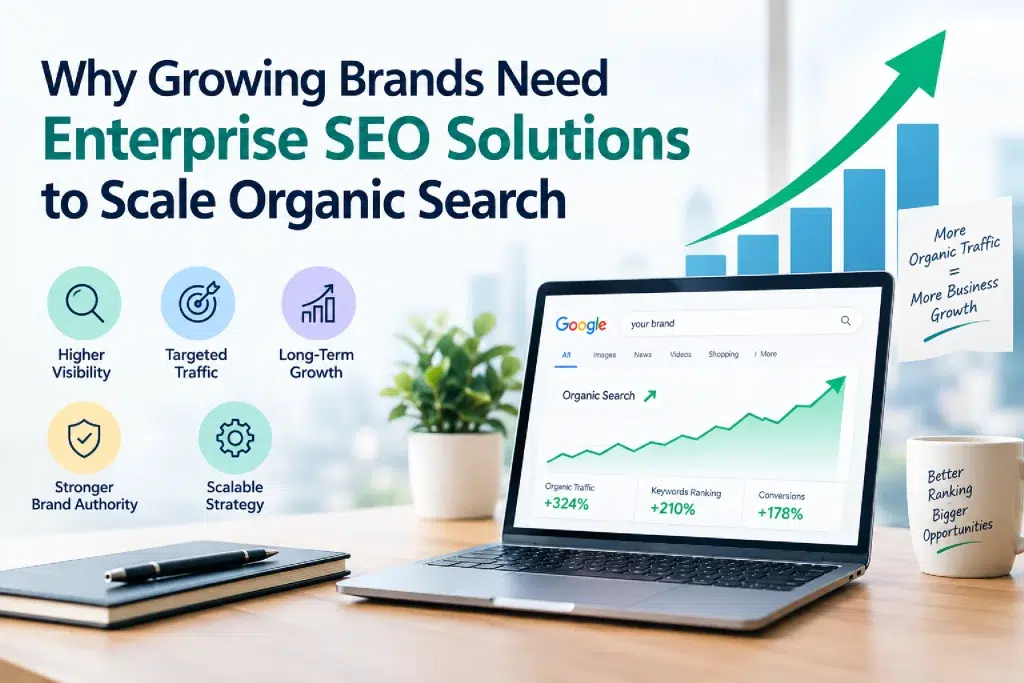
Enterprise SEO Becomes Essential as Websites Grow
A small site might have tens of pages, sometimes more. A bigger company can end up with thousands, or even millions, of URLs. When the site grows like that, SEO work needs more care than before.
One technical defect can hit a large set of pages at the same time. If internal links are weak, key pages may not get the attention they deserve. When duplicate pages show up, they can cause extra crawling and messy indexing. If the site layout is poorly planned, both visitors and search engines may struggle to find useful pages.
Enterprise SEO tools and services help teams spot these faults. They also support steps and checks meant to stop the same issues from coming back. Rather than working page by page, an SEO team can use systems that handle entire sections in one pass.
With this method, brands can keep what they already earn from organic search. They can also find fresh chances to show up in search results.
Enterprise SEO Solutions Create a Scalable Search Strategy
Growth brings chances and also adds mess. A company may move into new regions, ship new offerings, buy another firm, or add more services. Any of those steps can shift how the site shows up in search.
To handle that, an enterprise SEO approach sets the site up early. SEO experts look at how the pages are built, what people are searching for, the site’s tech setup, the current content they have, and what rivals are doing. Then they outline a plan that works for what matters now and still fits what may come next.
In my view, SEO performs better over time when it fits into the bigger digital plan. When it is treated like a separate task, results tend to be less steady.
A strategy that can grow with the business helps link SEO work to business targets. For instance, a team can focus on product groups that bring in money, write about key steps in customer journeys, and refresh pages that already get search views but do not yet rank as high as they could.
Technical SEO Supports Large-Scale Website Performance
Enterprise sites rely heavily on technical SEO. Bigger domains usually come with messy navigation, changing URL patterns, filters and parameters, JavaScript features, country or language versions, and several page layouts.
Search engines have to crawl all that and still make sense of it. When technical issues block access to key pages, the site may drop in unpaid search results. That can hurt brand reach over time.
A skilled enterprise SEO consultant can review many areas. This includes crawl control, how pages get indexed, overall site structure, redirect handling, canonical tags, structured data, speed on mobile, page experience signals, and links between pages. The consultant can also coordinate with engineers to roll out changes that hold up long term.
The goal should not end at patching errors from this week. Teams should set up day-to-day workflows for building and publishing pages. That way, similar SEO trouble is less likely to show up again.
That focus is what makes SEO scalable, not just a one-off cleanup of a website.
Content Strategy Helps Enterprises Capture More Search Demand
Big companies usually have a lot to work with. They often have deep experience, many products, plenty of data, and notes about what customers like. Still, that stuff is not always arranged for what people actually ask or how they look for answers.
Enterprise SEO can sort through the gaps. It can show where new pages are needed by looking at search intent and real customer questions. Instead of flooding the web with broad, repeat posts, a brand can make content that actually helps. These pages can answer specific queries, back buying choices, explain how products work, and show that the company knows its field.
Market research points to a clear shift. Many shoppers check online information before they buy anything. Because of that, businesses do better when they publish content that matches each step of the choice process.
A solid enterprise content plan links learning pieces to sales pages. When this is done well, readers do not feel pulled around. They can start by understanding a problem, then look at options, and later decide to explore the company’s offerings.
Enterprise SEO Firms Improve Coordination Across Teams
Big companies do not usually run SEO with just one marketing group. Work often spreads across writers, web developers, designers, product teams, public relations, data analysts, online store specialists, and senior leaders.
If roles and steps are not clear, the teams can trip over each other and cause SEO issues. During a site rebuild, links may shift, and menus can be updated in ways that break old paths. Content staff might put out pages that look like other pages already live on the site. Engineers may push site changes without checking whether search engines can still crawl and read the pages.
An experienced enterprise SEO partner can help these groups talk in a steady way. They can set simple rules, agreed workflows, shared notes, tracking updates, and approval checks so SEO work fits into everyday planning.
With that setup, SEO can stay ahead of problems. Teams can look at how organic search will be affected before a big change ships, instead of fixing things only after users and rankings are already impacted.
Data Helps Brands Make Better SEO Decisions
Enterprise SEO creates a lot of data. Teams end up tracking where pages show up and how users act after they land there. Common items include rank changes, organic visits, conversions, impressions, click rates, pages that get indexed, engagement signals, and numbers tied to sales.
Still, having data does not automatically lead to growth. What matters is what people do with it. They must read the results and turn them into choices.
An enterprise SEO consultant can spot trends across huge sets of information. They can also point out which fixes are worth the effort. For instance, reports might show that some product groups earn strong impressions but few clicks. From there, the team can adjust page titles, improve descriptions, tighten content to match search intent, or revisit the layout of each page.
Companies can also use this information to estimate the business value of organic search. They do not have to look only at rankings.
With this method, SEO becomes easier to explain. Leaders can see how organic search supports the company’s broader goals.
Database Consulting Services Can Support SEO Infrastructure
Big sites usually lean on databases to run key parts of the work. That includes product data, customer details, lists of categories, store or service locations, stock counts, and other content that changes over time. When a site gets more complex, how the database is built can affect speed, scale, and even how search engines find and read the pages.
This is one reason some teams bring in database consulting services. The goal is to check how well the database runs. Teams also look at the data layout, the links between systems, and the overall setup that feeds the website.
If the database is set up well, a company can handle large volumes of information without as much strain. It also helps when developers and SEO specialists work side by side. They can spot chances to make pages that users will actually find useful. At the same time, they keep the technical rules in place.
For brands that are growing, this kind of teamwork matters even more. It is most useful when the website has a huge product catalog or content that is created on the fly.
Enterprise SEO Agencies Help Brands Compete at Scale
As more brands move into bigger markets, the fight for attention gets tougher. Many older players already have big advantages. They often hold strong domain authority, have large content sets, run solid technical systems, and benefit from name recognition.
A good enterprise SEO firm can support a newer company in making a clear plan. It can review what rival sites do well. It can spot where content is missing. It can check for technical issues and ranking fixes. Then it can sort next steps by what will likely matter most for the business.
The better approach is to build lasting strength, not chase quick wins. Brands can earn trust by sharing content people genuinely need. They can gain useful mentions from the right sources. They can also improve how visitors move through the site. And they can make pages easier for search engines to read.
This kind of work is not instant, but it helps the site last longer in organic results.
Enterprise SEO Should Focus on Revenue, Not Vanity Metrics
If you run a growing brand, do not judge SEO only by rankings or site visits. Those numbers can help, but they do not always show real business impact.
A strong SEO effort for a large company should link what happens in search to results that matter. This can include qualified leads, product purchases, getting new customers, and higher revenue.
You can also look closely at landing pages. Some pages will bring visitors who actually convert. Some search themes will pull in people who are more likely to buy. After that, you can place more budget and time into the areas with clear commercial potential.
From what I have seen while studying SEO performance models, the best way is to connect search presence to the full path from first visit to final action. Yes, traffic matters. Still, the main goal is to bring in the right audience and help them do something useful after they arrive.
Choosing the Right Enterprise SEO Partner
Picking an SEO partner is not something to rush. If your brand is getting bigger, you should go past talk about quick rank boosts. You also need to see whether the team can handle tough site setups, technical SEO work, content planning, data tracking, and work with people in other departments.
No two companies are the same. Your site goals, your tech stack, your buyers, and your market rivals will all look different. A good enterprise SEO agency should shape the plan for your situation. It should not rely on a one-size-fits-all list.
You also want to know what is being done and why. Look for clear updates and open reporting. Enterprise SEO usually includes several stakeholders, so the agency needs to explain its suggestions in plain terms. Both technical staff and people outside SEO should be able to follow the message.
Conclusion
Growing a brand usually takes more than simple SEO fixes if you want to rank well in organic search. Sites get bigger, content grows, systems become more complex, and more companies fight for the same spots. That mix makes it hard to rely on one-off changes.
Enterprise SEO is meant to handle that scale. It ties together site health work, content planning, performance checks, how pages are laid out, and the goals the business cares about. A seasoned enterprise SEO consultant, or an agency that does enterprise SEO, can help a company spot weak points, fix technical issues, and set up repeatable workflows.
In my view, from what I have seen in market research, brands that treat SEO as part of their wider digital work tend to hold onto traffic better. If a company pairs solid SEO steps with dependable technical setup and database consulting support, it can build a base that lasts and keeps helping over time.