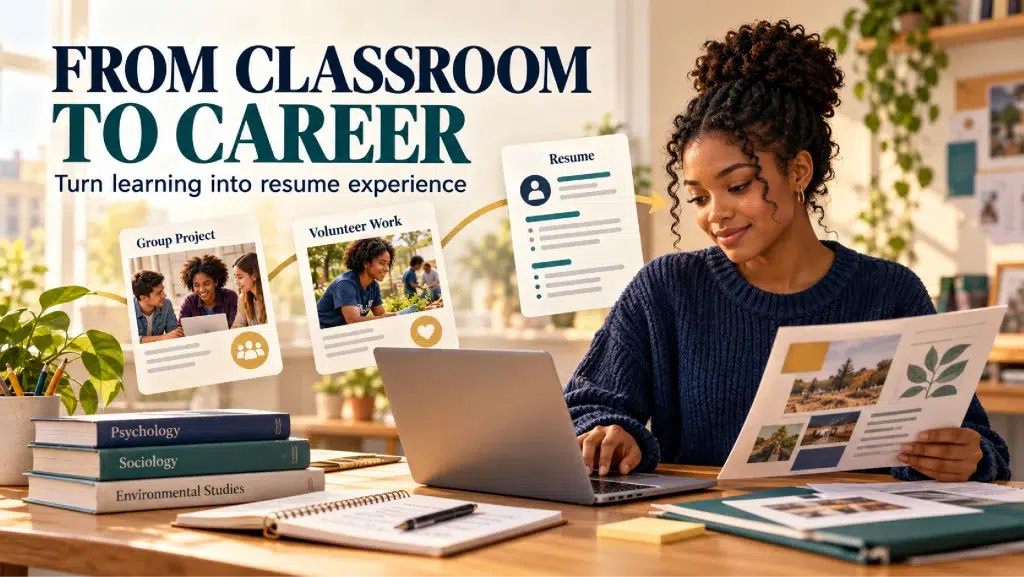
Writing a first resume can feel like being asked to prove something you have not had the chance to do. A student opens a blank document, reaches the work experience section, and wonders what belongs there without a formal job title.
Yet meaningful experience does not begin with a paycheck. It can begin with a group presentation, a school fundraiser, a community project, or the responsibility of helping someone else learn.
The challenge is recognizing what those experiences demonstrate and describing them honestly. For students preparing for internships, apprenticeships, or first jobs, that process can also become a useful lesson in self-awareness.
Start with responsibilities, not job titles
Before choosing a resume template, make a list of things you have actually done. Consider schoolwork, extracurricular activities, volunteering, personal projects, and paid or unpaid responsibilities outside the classroom.
Ask yourself:
- What did other people rely on me to complete?
- When did I solve a problem or explain something difficult?
- What did I create, organize, research, or improve?
- Which tools did I use, and what could I demonstrate with them?
A student who helped organize a club event may have practiced scheduling and communication. Someone who regularly tutors a younger learner may have developed patience, preparation, and the ability to explain ideas clearly.
These experiences belong on a resume when they are relevant to the opportunity. Label them accurately as projects, volunteering, leadership, or other experience rather than presenting them as employment.
Translate learning into evidence
Listing a skill is easy. Giving a reader a reason to believe it takes more thought.
“Good communicator” says little about what a student can do. A description of preparing a presentation, answering questions, or writing instructions makes that skill easier to understand.
A useful structure is: action + task + purpose or result.
Here are hypothetical examples showing how that works:
| Everyday experience | A more specific resume description |
| Helped with a group assignment | Coordinated deadlines for a four-person research project and combined individual findings into a shared presentation. |
| Volunteered at a community event | Welcomed visitors, explained activity schedules, and helped organizers manage the registration desk. |
| Tutored another student | Prepared weekly mathematics practice exercises and explained difficult concepts using worked examples. |
| Created a personal website | Built a three-page website to display photography, organizing images and testing navigation on mobile devices. |
Use numbers only when they are accurate. You do not need an impressive percentage to write a useful description. Explaining what you contributed is more valuable than inventing a result you cannot support.
Choose examples that match the opportunity
A first resume does not need to contain every achievement. It should help someone understand why your experience matters for the particular role.
Read the opportunity description and identify the main responsibilities. Then choose examples that show related abilities.
For a customer service role, you might emphasize answering questions at a community event or handling requests in a school office. For a design internship, an art portfolio and the process behind a poster project may deserve more space. For an administrative role, organizing records or coordinating club meetings could be relevant.
Use the employer’s terminology when it accurately describes your experience. Do not add a software package or technical skill simply because it appears in the advertisement.
Tailoring a resume means selecting the most useful evidence from your real background.
Keep a small portfolio of learning
A resume becomes easier to write when examples are already collected. Start a folder containing projects, certificates, feedback, and short notes about what you contributed.
For each substantial activity, record the goal, your role, the tools you used, and what you learned. Include a challenge you encountered and how you responded. These notes can later help with application questions and interview preparation.
Possible portfolio items include a research summary, a writing sample, a coding project, an event plan, or a presentation. Where a project involved several people, clearly identify your contribution.
Before sharing work publicly, remove private information and obtain permission where needed. A portfolio should demonstrate your abilities without exposing classmates’ details or a community organization’s confidential records.
Use digital tools with judgment
Formatting can become a distraction when students are still deciding what to say. A resume builder such as MyCVCreator can help organize a draft, allowing more attention to go toward selecting relevant experiences and explaining them clearly.
The student still needs to own the content. If an AI writing tool suggests a sentence, check every claim. Does it describe something you actually did? Does it exaggerate your role? Could you explain it comfortably in an interview?
For example, “Led a community education initiative” would be misleading if your contribution was helping set up one workshop. “Prepared materials and helped participants during a community workshop” is clearer and more credible.
Read the finished resume aloud. Replace language you would struggle to explain, check names and dates, and follow any file-format instructions provided with the application.
Make resume writing a learning activity
Educators, parents, and mentors can support this process without writing the resume for the student.
After a project, ask: What was your responsibility? What changed because of your contribution? What would you do differently next time? These questions help learners connect an activity to the skills they practiced.
A simple classroom exercise is to have each student select one recent assignment and write two sentences about their contribution. A partner then asks for clarification: What did you organize? Which information did you research? How did you decide what to include?
The goal is accurate reflection. Students should not feel pressure to make every ordinary task sound extraordinary.
It also helps to recognize that access to formal internships and clubs varies. Family responsibilities, independent learning, and local community involvement can offer meaningful examples. Students should decide what they are comfortable sharing and focus on relevant responsibilities without disclosing private circumstances.
Take one practical step today
Choose one project or responsibility from the past year. Write down what you did, identify a skill it required, and draft one sentence that demonstrates that skill. Then ask a teacher, mentor, or trusted peer whether the sentence is clear and accurate.
Repeat that process with a few more experiences, and a first resume begins to take shape.
Students do not need a long employment history to start explaining their potential. They need a thoughtful record of what they have learned, evidence of how they have applied it, and the confidence to describe both honestly.