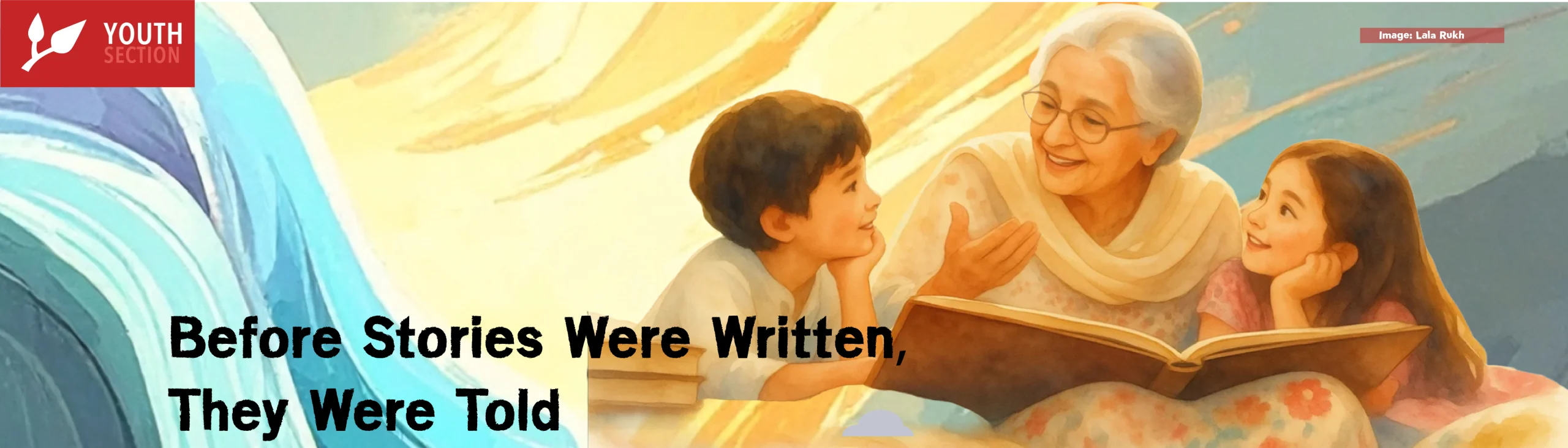
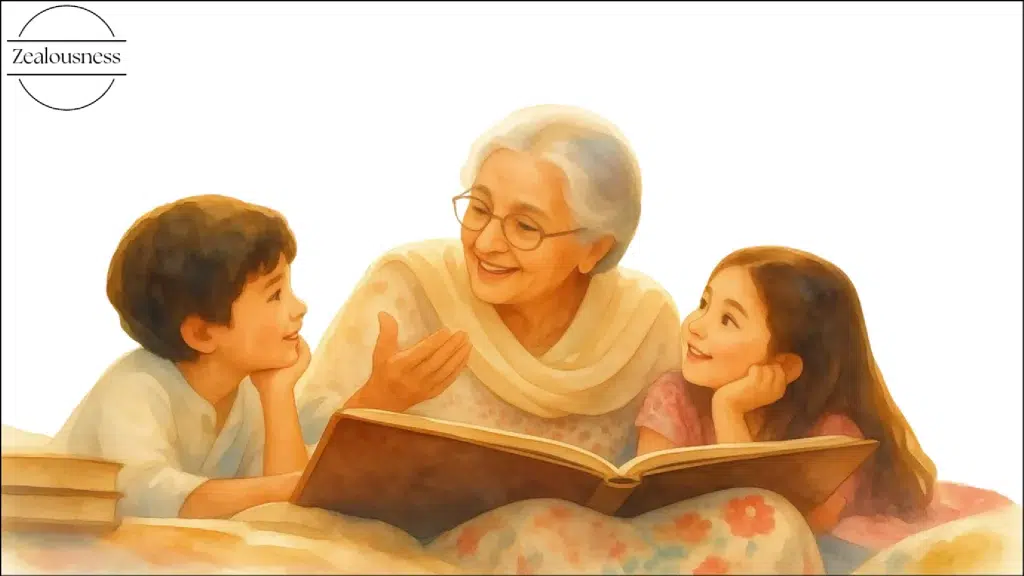
“Grandma, what was life like when you were little?”
A simple question, perhaps asked over dinner or while looking through an old family album.
The grandmother smiles. She remembers walking to school with friends, playing outside until sunset, and celebrating festivals with her neighbors. Soon, one story leads to another. The children laugh, interrupt with questions, and struggle to imagine a world so different from their own.
To an outsider, it might seem like an ordinary family conversation. Yet something meaningful is happening. A piece of history is being passed from one generation to another.
This simple act of intergenerational storytelling connects families through memories, traditions, and experiences that might otherwise be forgotten.
Now, imagine those stories never being told.
How much of our family history, cultural identity, and collective memory would quietly disappear?
Before Books, There Were Voices
Long before stories were recorded in books, people relied on spoken words to share knowledge and experiences.
Folktales, songs, proverbs, and legends helped communities explain their beliefs, remember important events, and pass traditions on to younger generations. UNESCO (n.d.) recognizes oral traditions as an important part of intangible cultural heritage. These traditions preserve cultural knowledge, social values, and collective memory.
Consider the Irish seanchaí, a traditional storyteller who shared folklore and local history. In South Asian households, grandparents may recount stories of village life, family celebrations, or traditions from their childhood. Although these traditions differ, they share something important: knowledge travels through human connection.
And storytelling is more than just remembering words.
A grandmother’s laughter, a grandfather’s dramatic pause, or the excitement in a storyteller’s voice brings memories to life. These small details make oral storytelling a distinctive form of artistic expression.
More Than Memories: Stories That Shape Identity
Have you ever heard a family story and suddenly understood something about yourself?
Perhaps your grandmother described leaving her hometown to begin a new life. Or your grandfather recalled working while studying to support his family. These experiences may reveal where certain family values, habits, or traditions began. Research supports the importance of such conversations.
Merrill, Booker, and Fivush (2019) examined how young people remember and share stories about their parents’ experiences. Their research identified several functions of family narratives, including understanding relationships, exploring identity, and communicating life lessons.
Another study explored intergenerational storytelling among Chinese, Māori, and European adolescents in New Zealand.
Reese et al. (2017) found cultural differences in how adolescents connected their parents’ stories to their own identities. These findings suggest that family storytelling does more than preserve memories. It can help people understand their place within a family and its wider cultural history.
Of course, not every family story is happy or inspiring. Some involve hardship, disagreement, or difficult choices. Yet these stories too can offer meaningful opportunities for understanding, reflection, and conversation.
What Happens When Nobody Asks?
Imagine an elderly woman who remembers the traditional songs her mother sang while cooking.
She knows the words, the melody, and the occasions when those songs were performed.
But her children never learned them.
Her grandchildren have never heard them.
One day, that knowledge may disappear.
This is one of the challenges facing oral traditions. Unlike written records, many depend on people continuing to remember, perform, and share them.
UNESCO (n.d.) emphasizes that opportunities for transmission are essential to keeping oral heritage alive.
However, preserving traditions does not mean resisting change.
Stories naturally evolve as people interpret them through different experiences. Younger generations may even find creative ways to give old stories new meaning.
The important question is whether they have the chance to hear them in the first place.
Can Modern Technology Help Keep Old Stories Alive?
We often associate technology with changing family communication. Yet it can also become a valuable tool for preserving personal histories.
The Smithsonian Institution Archives (n.d.) explains how oral history interviews can document memories and perspectives that may not appear in conventional historical records.
Digital resources can also help younger generations explore cultural traditions and discover stories beyond their own families. Zealousness explores this further in its article ”A Guide to Finding Cultural Inspirations Online.”
A smartphone, a quiet room, and a willing storyteller can be enough.
Here are a few meaningful ways to start:
- Ask questions beyond dates and events. What games did your grandparents play? What did their neighborhood look like? What made them laugh?
- Record conversations with permission. Short audio recordings can preserve voices, expressions, and personal memories for future generations.
- Bring old photographs into the conversation. A family picture may uncover stories nobody thought to ask about.
- Turn memories into creative projects. Children can illustrate family stories, create small books, or perform traditional tales.
- Create community storytelling opportunities. Libraries, schools, and local arts organizations can bring generations together to share experiences.
Such activities connect storytelling with visual art, performance, writing, and community participation.
They also reflect the importance of creative expression promoted through iN Education’s educational and arts initiatives.
Some Stories Deserve More Than a Passing Conversation
We often think history belongs in museums, libraries, and textbooks. But history also lives in ordinary homes.
It lives in the recipes remembered without measurements, the songs sung during celebrations, and the childhood stories repeated around family tables.
Not every memory needs to become a public record. Some stories are personal, and their owners should decide whether to share them.
Still, when someone offers to tell us about their past, perhaps we should make time to listen.
Because one day, we may wish we had asked another question.
And sometimes, the stories we never thought to preserve are the ones we miss the most.
“One day, the voices that told us stories may fall silent, but the memories they leave behind can live for generations, if only we take the time to listen.”
References
- Merrill, Natalie, Jordan A. Booker, and Robyn Fivush. 2019. “Functions of Parental Intergenerational Narratives Told by Young People.” Topics in Cognitive Science 11 (4): 752–73. https://doi.org/10.1111/tops.12356.
- Reese, Elaine, Robyn Fivush, Natalie Merrill, Qi Wang, and Helena McAnally. 2017. “Adolescents’ Intergenerational Narratives Across Cultures.” Developmental Psychology 53 (6): 1142–53. https://doi.org/10.1037/dev0000309.
- Smithsonian Institution Archives. n.d. “How to Do Oral History.” Accessed October 27, 2026. https://siarchives.si.edu/history/how-do-oral-history.
- UNESCO. n.d. “Oral Traditions and Expressions Including Language as a Vehicle of the Intangible Cultural Heritage.” Accessed October 27, 2026. https://ich.unesco.org/en/oral-traditions-and-expressions-00053.