
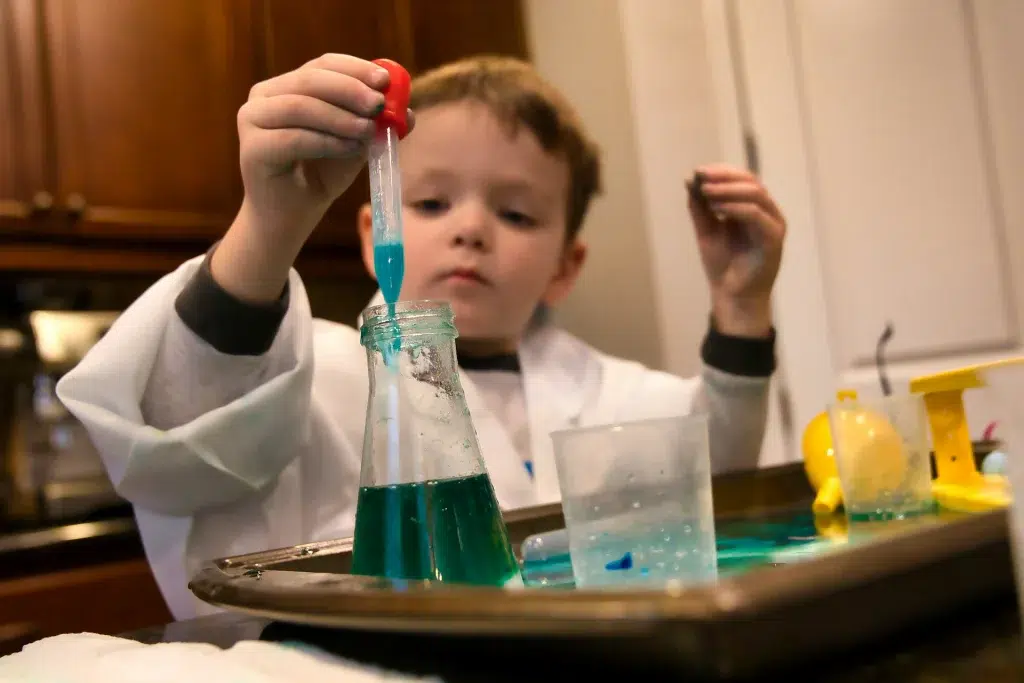
The old-school image of science class often brings to mind students quietly flipping through textbooks. But today, education aims for something much more lively! For students to really get a handle on scientific ideas, they need to see those ideas come to life. The trick for teachers is to build lessons that truly connect big, abstract theories with real-world stuff they can touch and see. When kids can actually observe, handle, and experiment with what they’re learning, science stops being just a bunch of facts to memorize and becomes a way to understand the world around them. This shift doesn’t just help them understand better; it also sparks real curiosity and a lifelong love for discovery.
Moving Beyond the Textbook with Project-Based Learning
One of the best ways to make science feel real is through project-based learning. Instead of reading about ecosystems in a book, students might get to design and look after a small terrarium. This one project makes them think about nutrient cycles, food chains, and the delicate balance of a closed environment. Project-based learning encourages students to tackle a tricky problem over a longer period, weaving in knowledge from different science areas. These projects are a perfect example of Hands-On STEM Learning because they demand that students get involved, rather than just watching. The goal is to create something tangible or find a solution, which makes the whole learning process feel meaningful and important.
The Power of Inquiry-Based Science
Another powerful approach is to build lessons around asking questions. In a typical lab, students usually follow strict instructions to get a specific result. An inquiry-based approach flips that idea on its head. The lesson starts with a question or something puzzling, and students are encouraged to come up with their own guesses and design experiments to test them out. For instance, instead of explaining how buoyancy works, a teacher might put out a bunch of objects and a basin of water, then ask students to figure out what makes something float or sink. This method naturally encourages curiosity and critical thinking because students are in charge, learning to think just like real scientists.
Integrating Technology for Virtual Labs and Simulations
While doing physical experiments is super valuable, technology offers some amazing tools to help them along. Not every school has the budget for fancy lab gear, and some experiments are just too risky or complicated to do in a classroom. That’s where virtual labs and simulations come in handy. Students can do a virtual frog dissection without any ethical worries or safety concerns, or they can use a physics simulator to see how gravity works on a planetary scale. These tools make abstract ideas visible and let students play around with variables in ways that would be impossible in the real world. Technology can also help with collecting and analyzing data, teaching students how to use modern scientific instruments.
Fostering Classroom Readiness Through Practical Experience
For these modern teaching methods to really work, teachers need the right training and support. It’s not enough to just know *about* project-based or inquiry-based learning; educators need hands-on experience in how to actually plan and manage these activities effectively. Professional development programs that show teachers how these techniques work are crucial. When teachers get to experience hands-on learning from a student’s point of view, they understand much better how to bring it into their own classrooms. This focus on practical application is key for improving pre-service science teachers’ classroom readiness and giving them the confidence to try new things beyond traditional teaching.
By mixing hands-on projects, student-led questions, and smart technology, educators can create a science curriculum that’s both fun and effective. These methods help close the gap between simply knowing a fact and truly understanding a concept, getting students ready not just for tests, but for a future where they can think critically and solve tough problems.